Key points
- CDC puts snap traps first and keeps bait stations for infestations that persist.
- A covered trap holds each catch out of sight. A station shows no catch, and mice that eat bait often die inside the house.
- Rodenticides act on people, dogs and cats the same way they act on mice, so stations go where children and pets cannot reach.
- Sealing the gaps decides whether mice come back, whichever tool you choose.
How a covered trap works
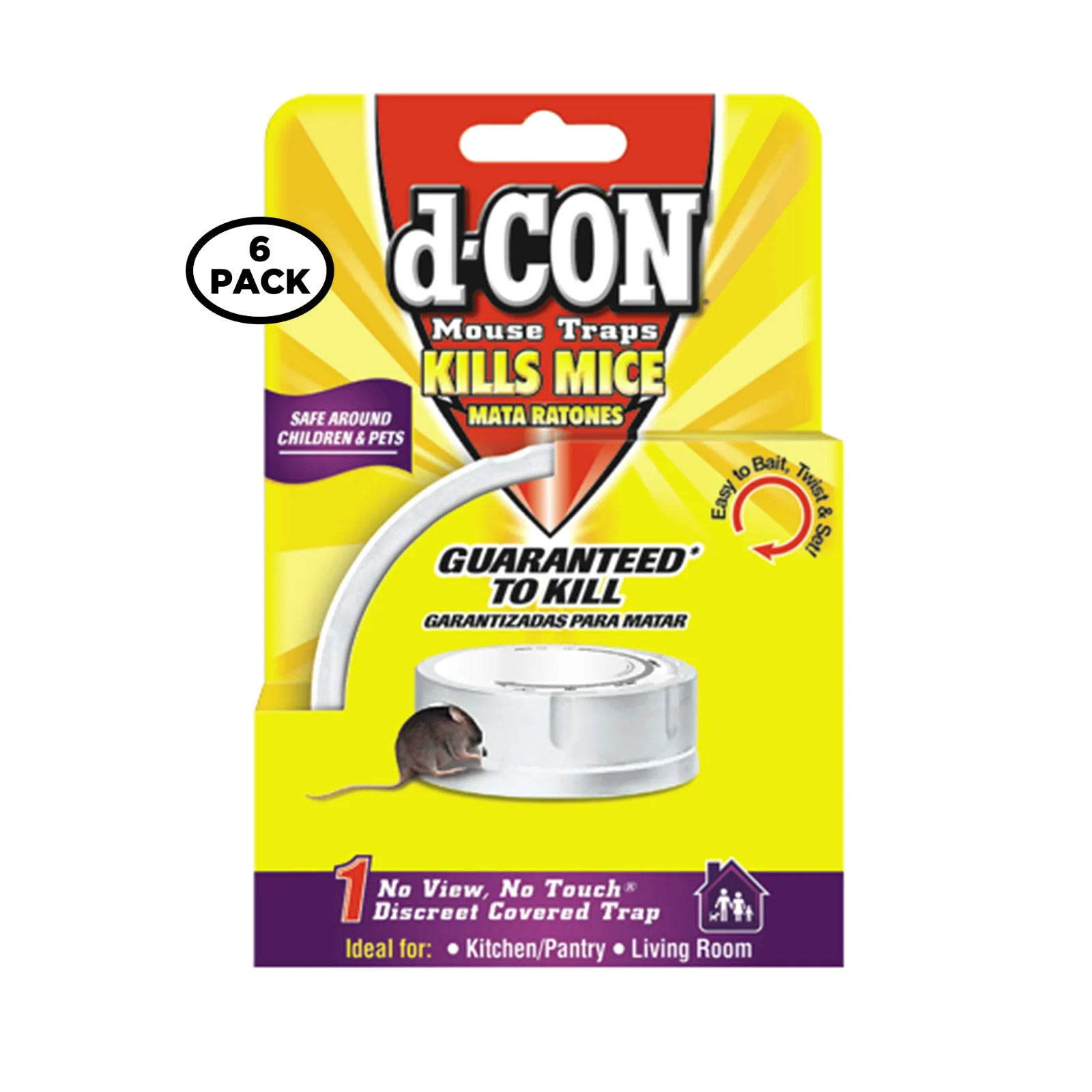
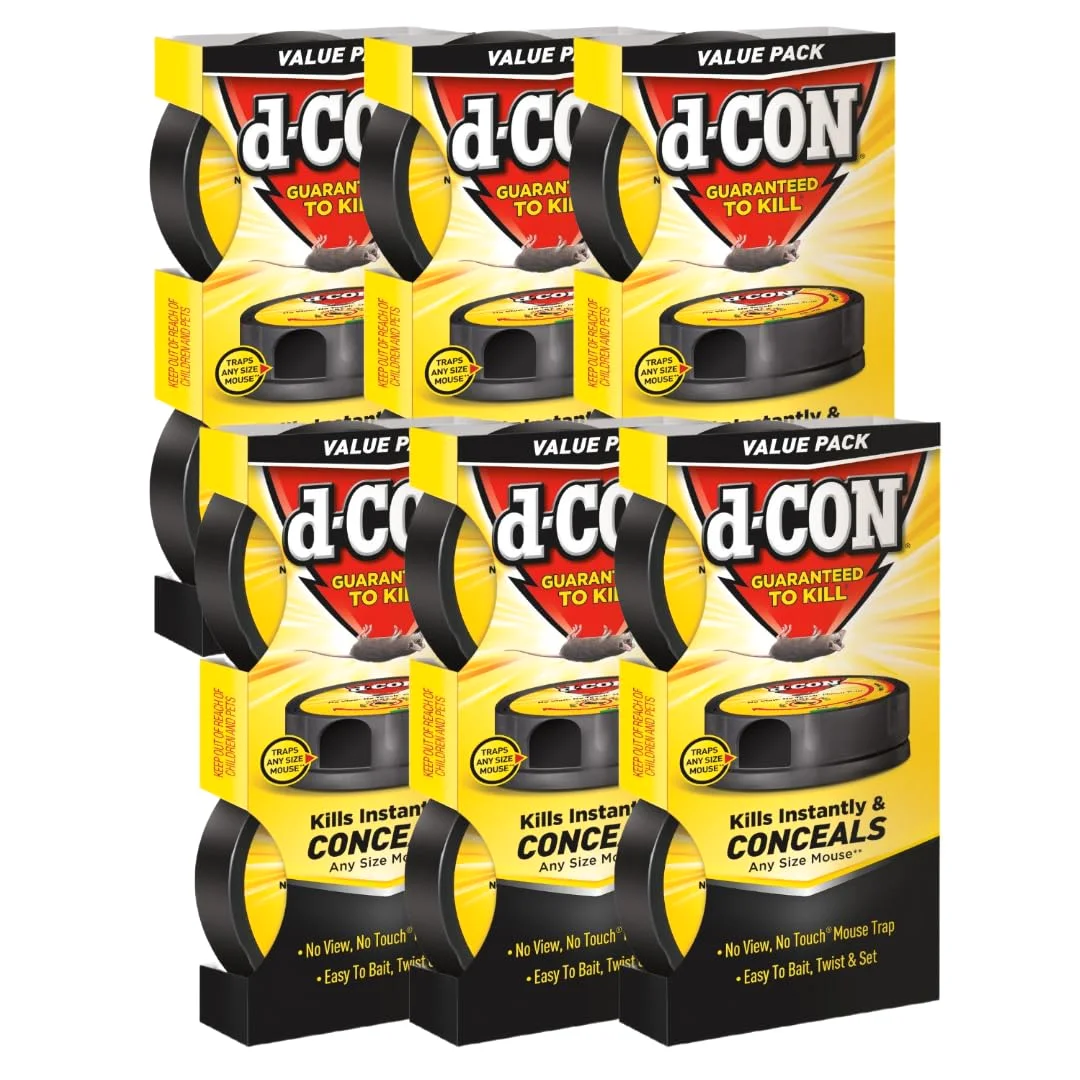
The d-CON No View, No Touch trap is a snap trap inside a round, closed case. You add a little bait, such as peanut butter, to the compartment and twist the case to set it. Any mouse that goes in is caught out of sight, and the whole trap goes in the trash with the mouse inside. There is no poison in it, only the food you add.
CDC describes snap traps in plain steps. Use a small amount of bait such as peanut butter, set the trap against the wall where droppings, nests or gnaw marks are, and check it every day. With a covered trap the daily check is a glance at the case. Because the cover hides the catch, you never handle the mouse or have to look at it.
CDC also recommends EPA-registered products for any bait you use, and it keeps every trap and every bait out of reach of children and pets. A covered trap holds no poison, yet a snap trap of any kind still belongs where small hands and curious noses cannot get to it.
How a bait station works
Inside a bait station, poison bait sits in a closed case with small entry holes. The mouse walks in, feeds on the block and leaves. Nothing snaps and nothing is caught, so the only evidence the station is working is bait that gets smaller and signs that stop.
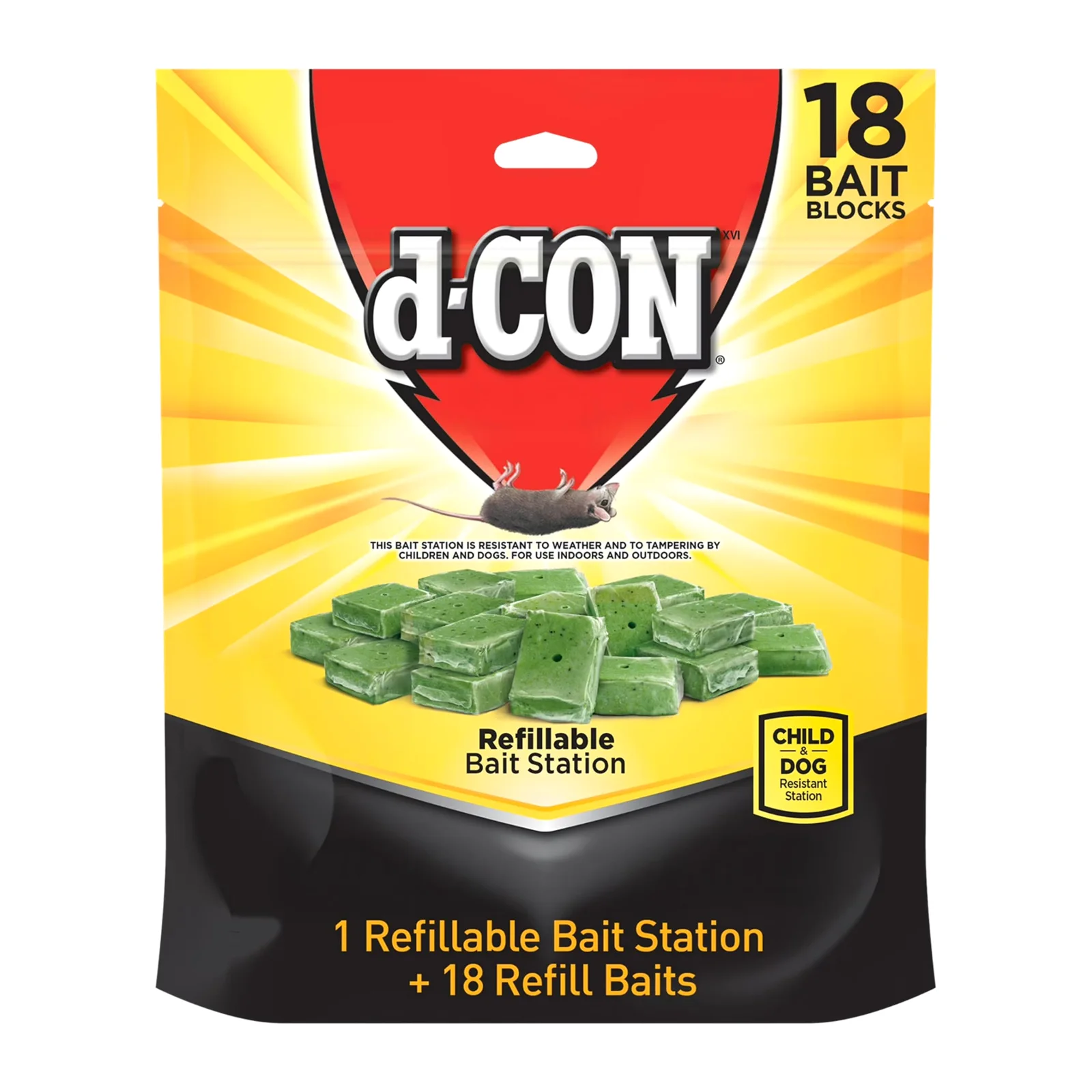
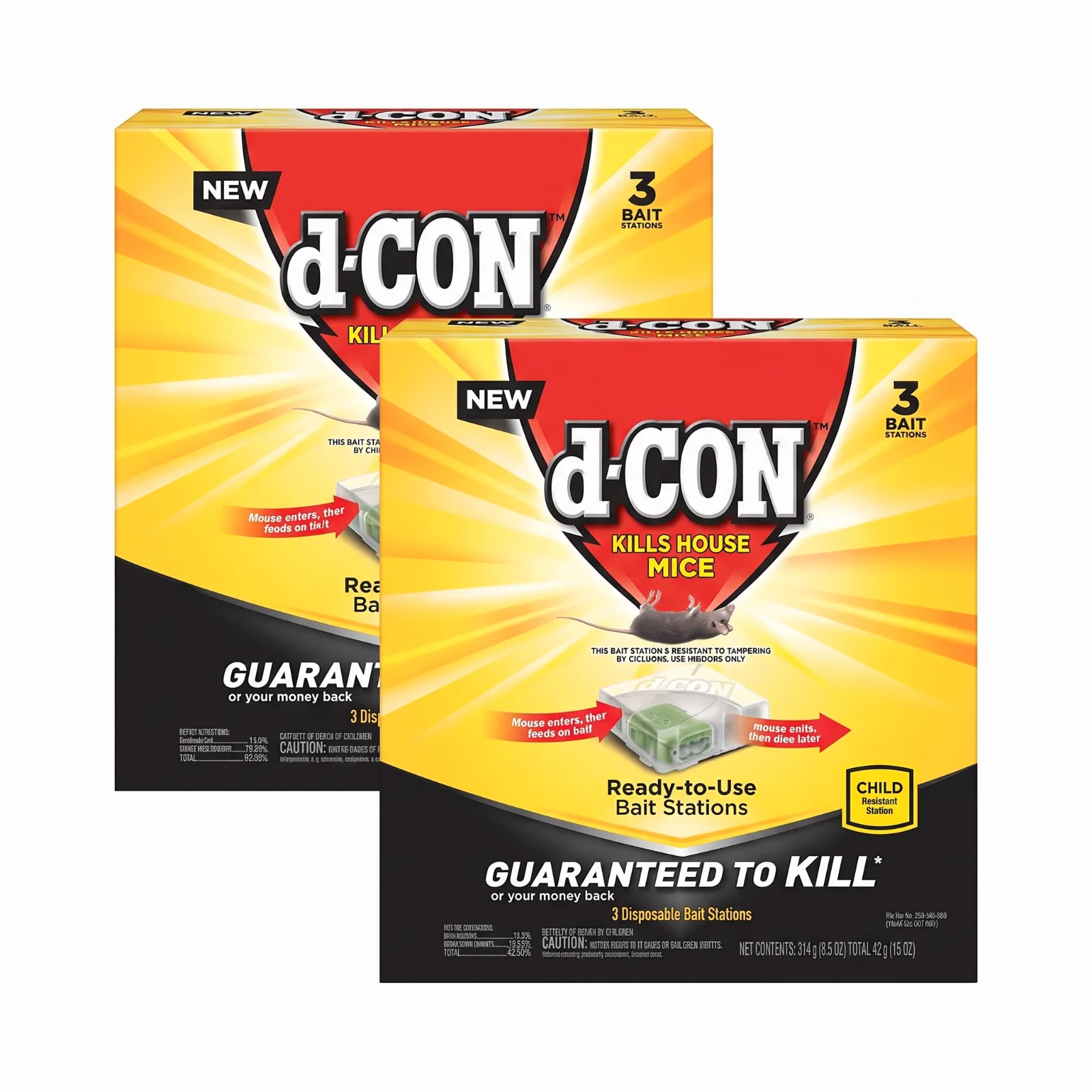
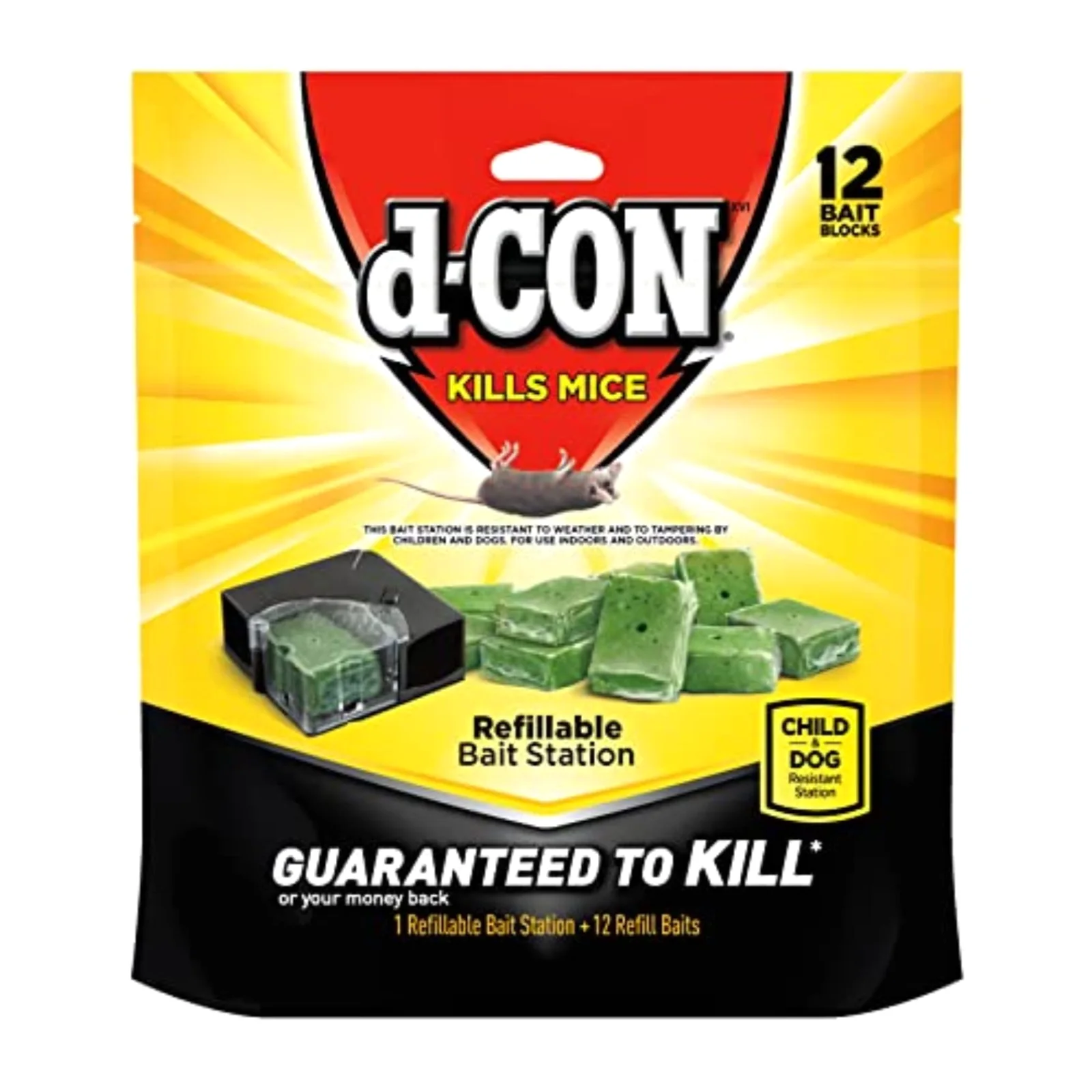
EPA allows consumer bait in one form: a ready-to-use station that holds bait in block or paste form, with loose bait no longer permitted. A consumer product may not hold more than one pound of poison. The d-CON refillable Corner Fit station comes with refill blocks that click into its cartridge. Its disposable sibling arrives filled with 0.5 oz of bait in each station and goes in the trash whole.
Refillable or disposable comes down to how you like to handle bait. With the refillable model you keep one case and later buy only the box of blocks, which means opening the cartridge and loading a block by hand. The disposable model has nothing to load, and its clear cover shows how much bait is left. EPA proposed further limits in November 2022, among them a ban on refillable stations in consumer-sized products. That is still a proposal, not a rule.
Both sit on the mouse bait stations shelf, and the label of each one sets where it may go. The package of the refillable model reads "child and dog resistant". Even so, EPA tells you to place traps and baits only where children and pets cannot get to them.
What you see afterwards
Most people feel this difference first. A trap gives a result you can count: one trap, one mouse, into a bag and out to the garbage. With a station there is nothing to count. UC IPM points out that mice that eat poison bait often die inside the house, out of sight, rather than in the open.
There is a second reason to collect what you can. EPA asks you to remove dead rodents promptly so pets and wildlife do not eat them. NPIC calls that risk secondary poisoning: an animal that eats a poisoned mouse can take in the poison too. Rodents, people, dogs and cats are all mammals, NPIC notes, so a rodenticide acts on all of them in the same way.
| Question | Covered snap trap | Bait station |
|---|---|---|
| What CDC says about it | Recommended first, to reduce rodents around the home | For infestations that persist |
| Poison inside | None, only the food you add | Bait in block or paste form, inside the station |
| What you see | The trap holds the catch | Bait gets smaller, no mouse to see |
| Where the mouse ends up | Inside the trap, thrown away whole | Often somewhere inside the house, UC IPM notes |
| Where it may go | Along walls where mice run | Where its label allows, out of reach of children and pets |
From CDC, UC IPM, EPA and NPIC.
Kitchen, garage or a home with pets
In a kitchen, with a few mice and food all around, a trap is the simpler tool. UC IPM calls trapping the preferred method where only a few mice are present, and it keeps poison away from counters and cupboards. Several covered traps along the walls where the droppings are, no more than about 10 feet apart, cover the short range a house mouse uses.
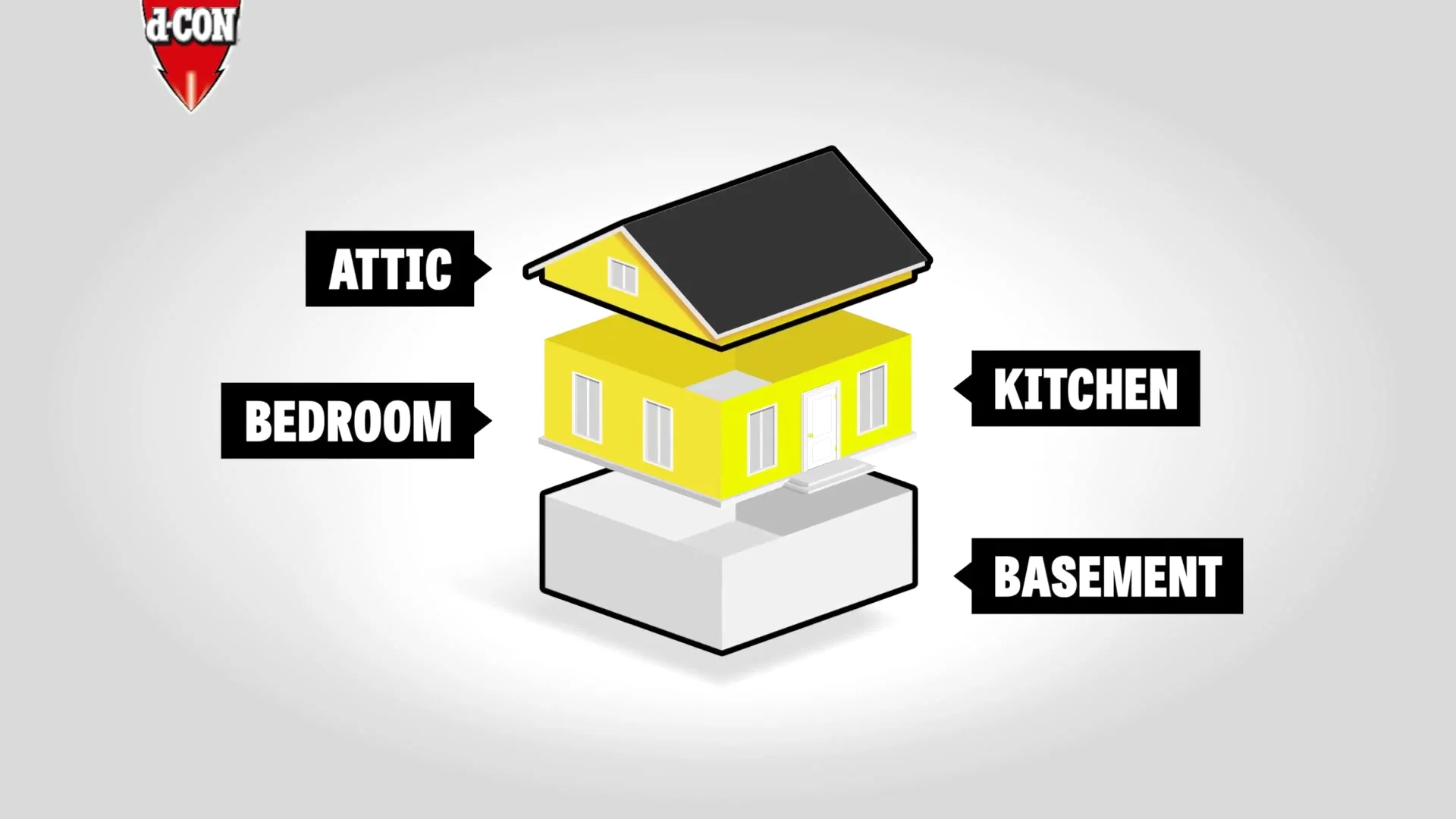
A garage, a shed or a basement corner that nobody uses is where a station makes sense, if the label allows that spot. CDC keeps poison and bait stations for infestations that persist after traps alone have not ended them. For corners, spacing and the outdoor line, see our guide on where to put a mouse bait station.
With children or a dog in the house, every choice comes down to reach. EPA says to store pesticides out of reach, such as in a locked cabinet or shed, and never next to food or pet food. NPIC adds that baits flavored for rodents can attract children and pets too, and it advises choosing a station matched to the children, pets and weather it will face. Storage, placement and who to call are all in our guide on mouse bait safety with kids and pets.
| Product | What it is | From | Buy |
|---|---|---|---|
| Refillable Corner Fit Mouse Bait Station | A reusable bait station with refill blocks in the box | $0.75 per refill |  |
| Disposable Corner Fit Mouse Bait Station | A sealed station already filled with bait | $2.52 per station | |
| No View, No Touch Covered Mouse Trap | A covered snap trap, thrown away with the mouse inside | $2.55 per trap | |
What CDC and UC IPM say about other methods
CDC advises against glue traps and live traps, because they can make rodents urinate. Our d-CON catalog carries neither glue traps nor live traps. UC IPM is just as direct about the plug-in sound devices sold to chase mice away: high-frequency electronic devices are not effective against house mice.
Whatever you choose, the gaps in the house decide whether mice return. UC IPM calls exclusion the most successful and permanent control, since mice enter through openings as small as 1/4 inch. Steel wool makes a good temporary plug, and metal or concrete a lasting one. Plastic screening, rubber, foam and wood alone will not hold a mouse back.
Knowing when the mice are gone
Check traps daily, as CDC advises. If a full week passes with no mice caught and no new signs, CDC considers the infestation over. At that point the traps go in the trash, and any station is picked up and handled as its label directs. Put gloves on first, because UC IPM warns against touching mice with bare hands. NPIC gives the same advice for collecting any dead rodent you find around the house or yard.
Many houses end up with a mix: covered traps in the kitchen, where each result shows, and a station in the garage, where mice keep coming back. Every d-CON trap and station pack sits together on the all products page, so a trap pack and a station pack can be compared side by side before you order.
Every product named here is part of the d-CON mouse control line.