Key points
- Tamper-resistant means harder to open, not impossible to open: EPA says no station offers absolute protection.
- The tier of a station and the places it may go are printed on its label, and the label decides.
- If a child swallows bait, call Poison Help at 1-800-222-1222, or 911 if the child is unconscious, has trouble breathing or has convulsions.
- If a pet eats bait, call your veterinarian, the Pet Poison Helpline at (855) 764-7661 or ASPCA Poison Control at (888) 426-4435.
Why bait lives inside a station
Mouse bait works on the body of a mammal, and children, dogs and cats are mammals too. The National Pesticide Information Center says rodenticides act on all of them the same way. Bait is also flavored so a mouse will eat it, and that smell and taste can draw a curious child or a hungry dog.
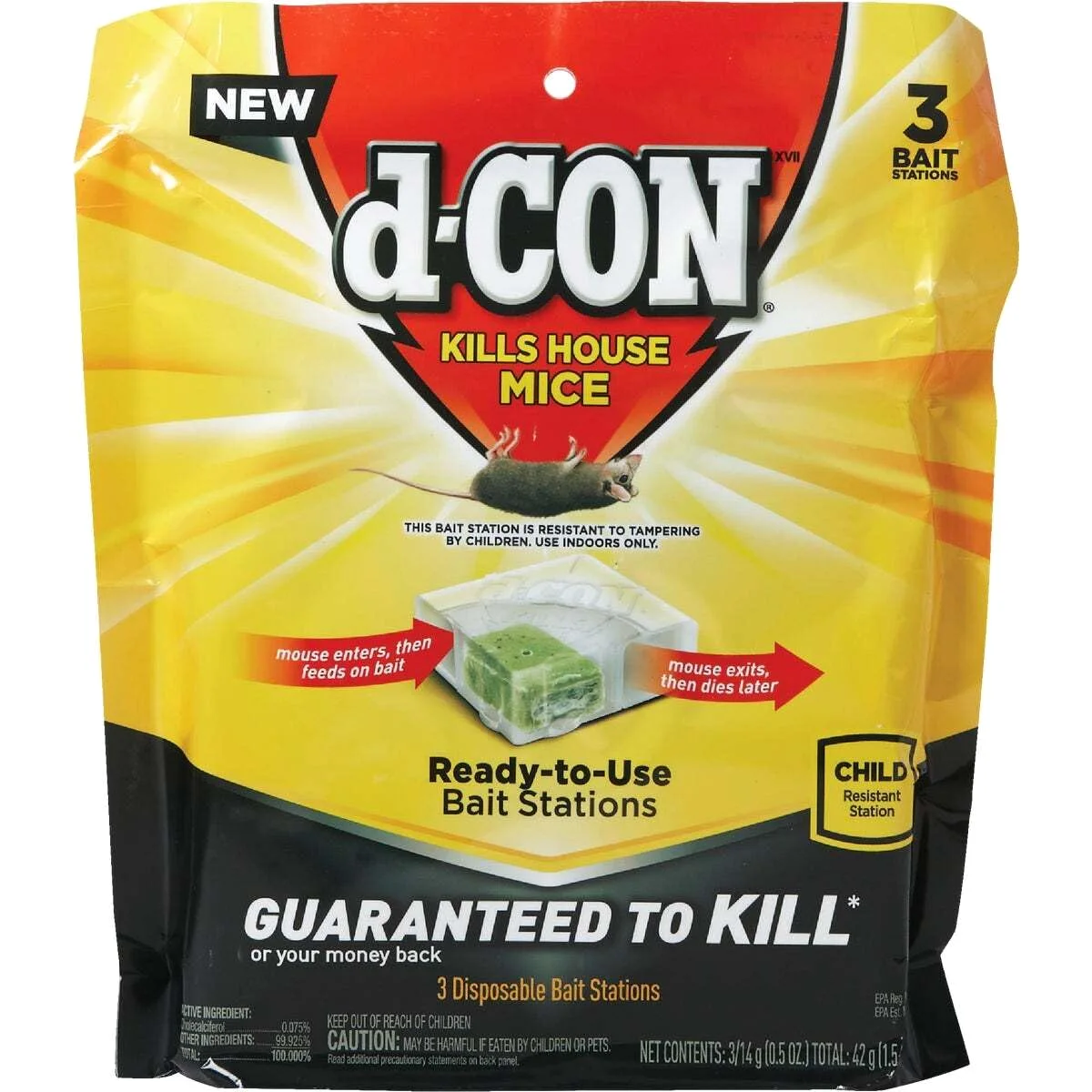
For that reason EPA requires consumer bait to stay secured inside the station that comes in the package. Second-generation anticoagulants are left out of consumer products altogether, and bromadiolone, one of them, is meant for sale to professionals only. A d-CON Corner Fit station puts a closed plastic shell between the bait and your floor.
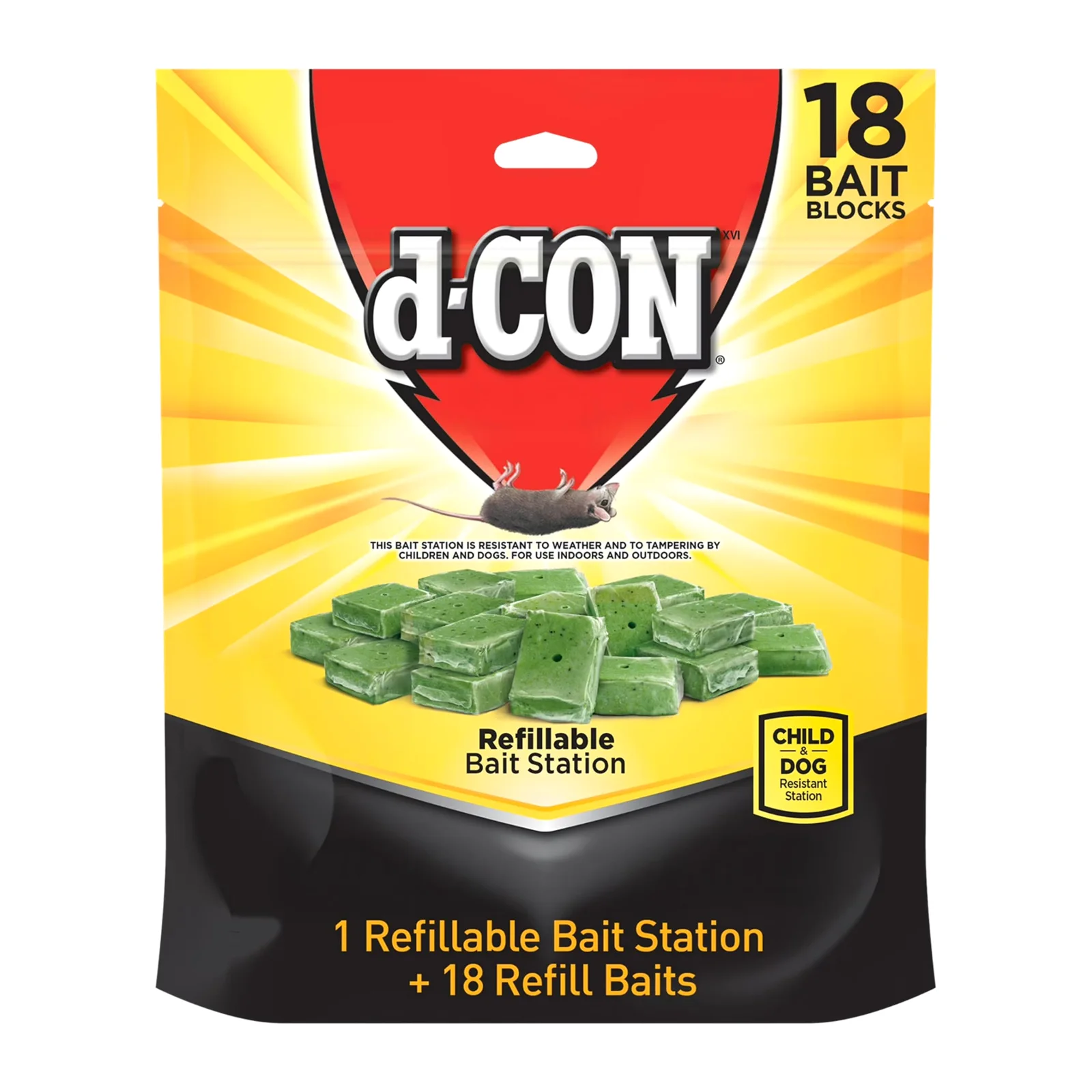
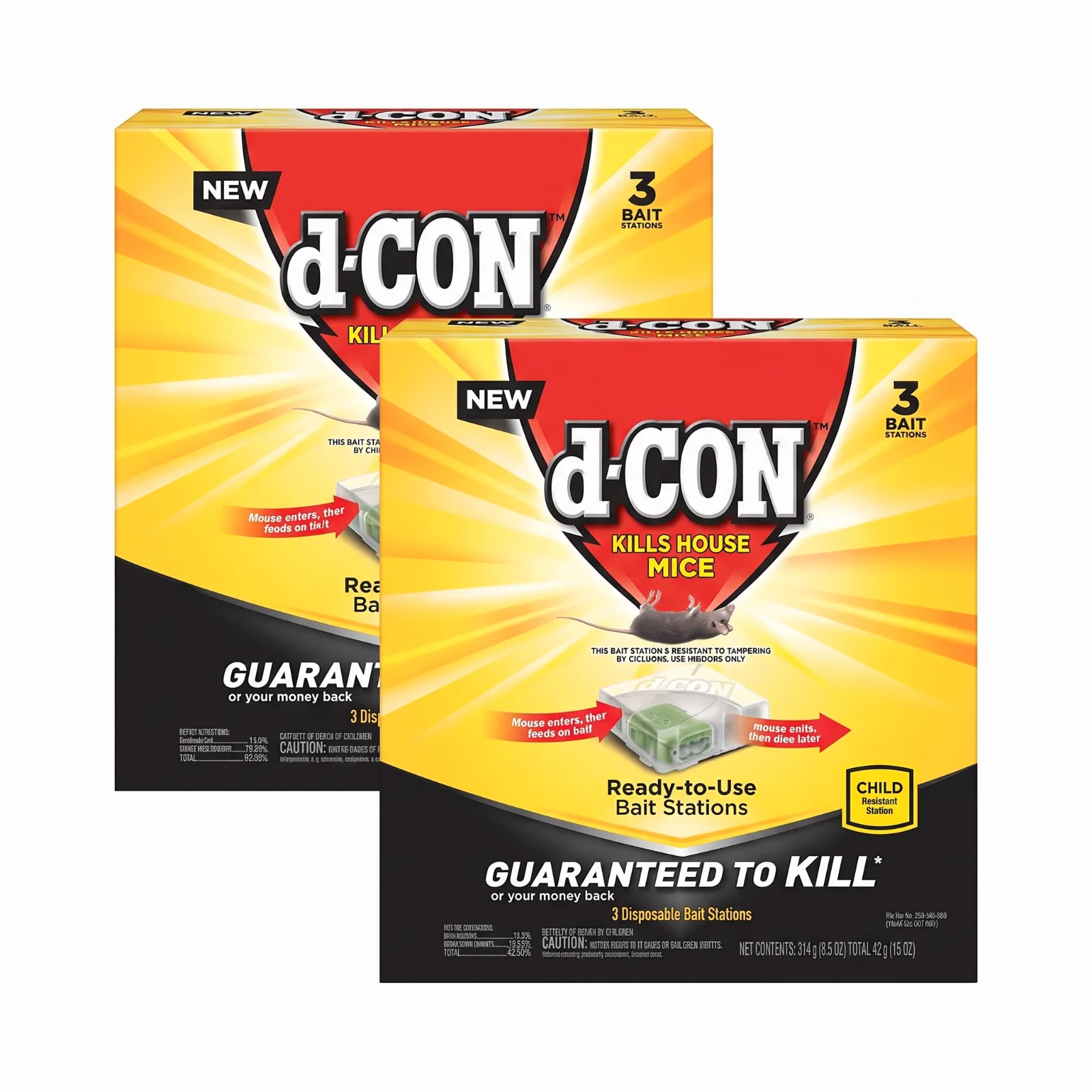
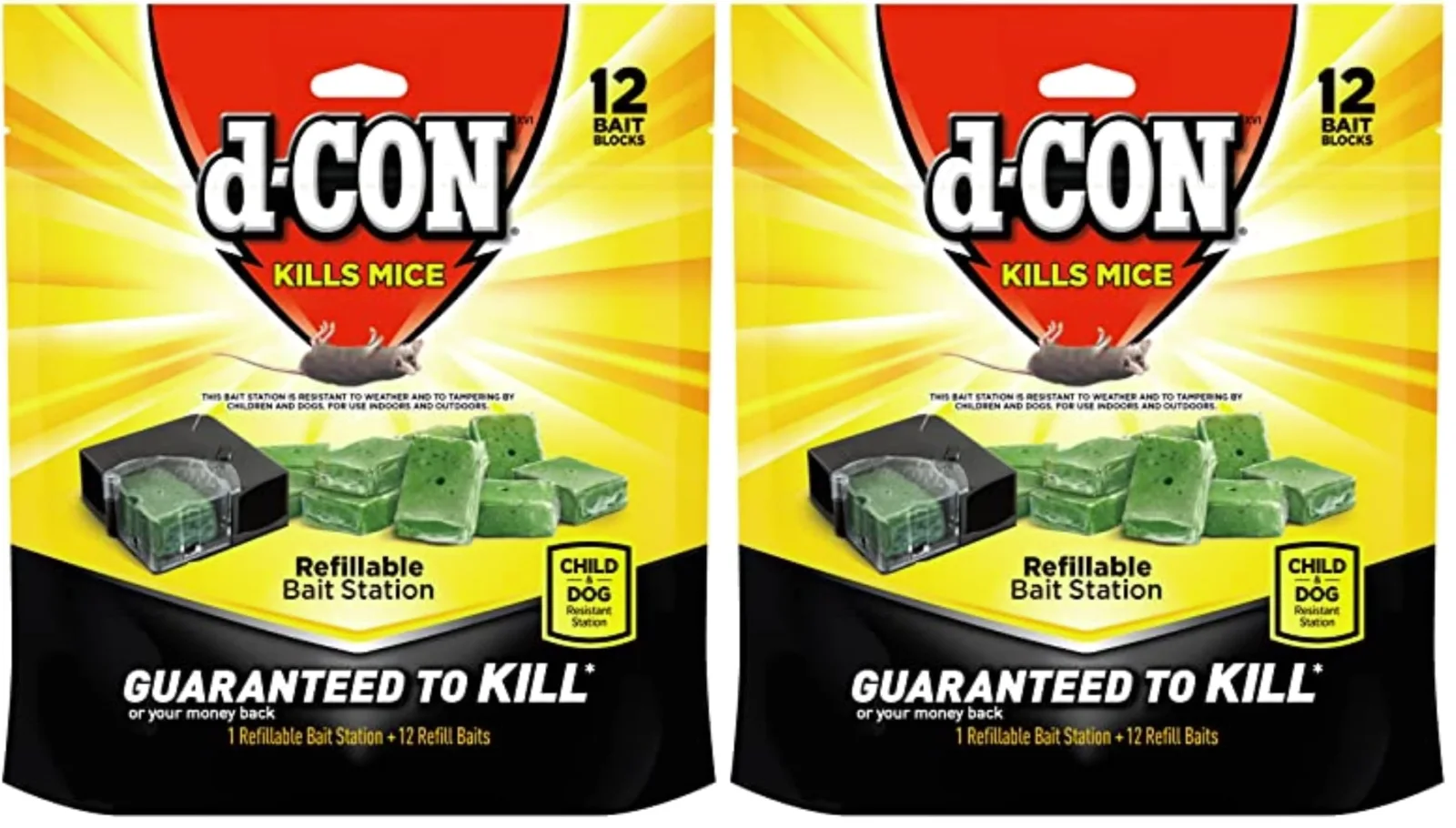
Two versions sit on our shelf of d-CON bait stations. The refillable station takes refill blocks that click into a cartridge, while the disposable station arrives filled and goes in the trash whole when the bait is gone.
What tamper-resistant means, and what it does not
Behind the word on a station label stands EPA PR Notice 94-7, issued in 1994. That notice retired an older label word that suggested complete bait protection and put "tamper-resistant" in its place, because no station can promise that. The change is worth remembering every time the package catches your eye.
Numbers stood behind that caution. EPA noted that in 1988 more than 10,000 rodenticide incidents were reported to poison centers, and nearly 90% of them involved children under six. Between 1993 and 2008, NPIC reports, poison centers still logged 12,000-15,000 accidental rodenticide exposures a year in children under 6, most of them without symptoms.
To earn the term, a station must stand up to dogs and to children under six who use hands, feet or objects found nearby. EPA also asks for these points:
- The station can be locked or sealed.
- It is anchored, or built so the bait cannot be shaken out.
- The bait stays contained inside it.
- Its design and color are not especially attractive to children.
- Precautionary statements are printed on it.
The four tiers on a station label
Household bait stations fall into four tiers set by EPA, and the tier tells you where a station is allowed to go. Read it on the package before you pick a spot, not after the station is already behind the stove.
Each step down the list hands more of the work to the room around the station. At Tier 4 the room itself has to stay closed to children and pets.
- Tier 1 resists young children, dogs and weather, and may be used indoors and outdoors within 50 feet of buildings.
- Tier 2 resists children and dogs, for indoor use only.
- Tier 3 resists children, for indoor areas pets cannot reach.
- Tier 4 is for indoor areas that neither children nor pets can reach.
Where bait goes in a home with kids and pets
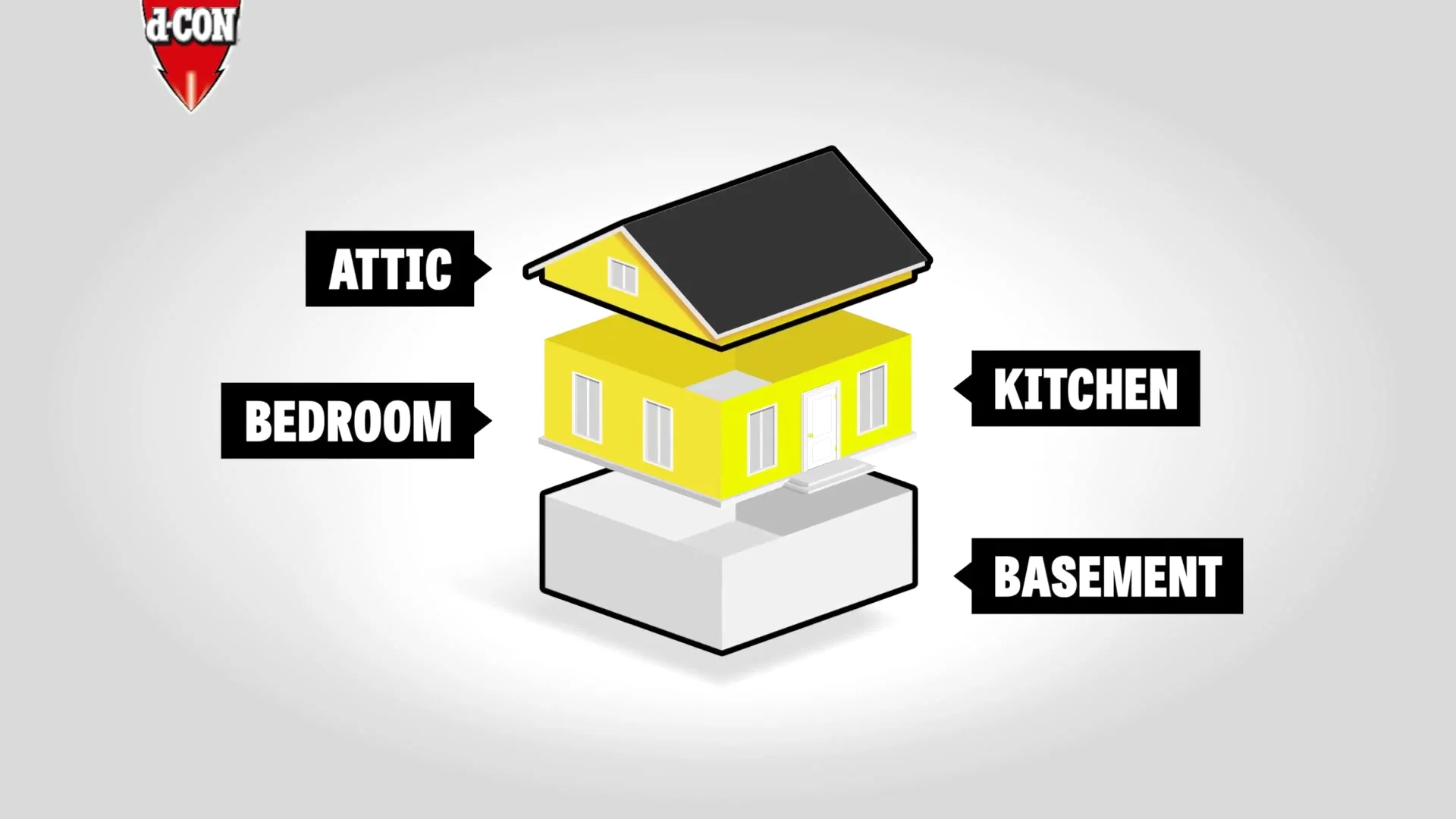
EPA puts traps and baits only where children and pets cannot get to them. In practice that means behind the refrigerator, under a cabinet base, in a closed attic or along a garage wall the dog never visits. The guide to where to put a mouse bait station walks through each room.
Storage counts as much as placement. Unopened bait belongs in a locked cabinet or shed, never next to food or pet food. Refill blocks stay in their closed package between uses.
Write down where each station sits as you set it. A short list taped inside a cabinet door lets anyone in the house find every station later. It also keeps a forgotten one from turning up in a toy box when furniture moves.
Caution
- Read the whole label before you open the package.
- Keep bait and stations out of reach of children, pets and wildlife.
- Never take bait out of a station or break a station open.
- Store unused bait in its closed package, away from food and pet food.
- Pick up dead mice with gloves and throw them away promptly.
- If bait is swallowed, call Poison Help or a veterinarian at once.
If a child swallows bait
Call 911 first if the child is unconscious, has trouble breathing or has convulsions. Otherwise call Poison Help at 1-800-222-1222, or reach the same service online, and follow what the specialist tells you. The label carries first aid directions as well.
Have the package in your hand when you call. EPA asks for the registration number printed on the label, marked EPA Reg. No., because it tells the poison center exactly which product is involved.
Poison Control notes that most small ingestions, such as a toddler tasting a product, cause no symptoms. EPA requires a bittering agent and an indicator dye in every anticoagulant rodenticide, though nobody knows whether the bitter taste limits how much gets swallowed. Make the call even when the child seems fine.
A question that is not an emergency has its own line. The National Pesticide Information Center, at 1-800-858-7378, gives information about pesticide products and what is in them.
| When | Who to call | Number |
|---|---|---|
| Unconscious, trouble breathing or convulsions | Emergency services | 911 |
| A person swallowed bait or got it on skin or in the eyes | Poison Help | 1-800-222-1222 |
| A dog or cat ate bait | Pet Poison Helpline | (855) 764-7661 |
| A dog or cat ate bait | ASPCA Animal Poison Control | (888) 426-4435 |
| A question about a pesticide product | National Pesticide Information Center | 1-800-858-7378 |
Keep the package with its EPA Reg. No. next to the phone when you call.
If a pet eats bait, or eats a poisoned mouse
Call your veterinarian, the Pet Poison Helpline at (855) 764-7661 or ASPCA Poison Control at (888) 426-4435. Products with similar names can hold very different poisons. The Pet Poison Helpline says the active ingredient or the EPA Reg. No. on the package decides both the risk and the treatment.
Waiting for signs is a mistake. With long-acting anticoagulants, internal bleeding usually shows 3-5 days after a pet eats bait, and NPIC says signs can be delayed for up to five days. Bromethalin is more dangerous to cats than to dogs.
Pets meet this problem often. In ASPCA Poison Control data for 2025, rodenticides ranked number seven, at 6.5% of pet toxin exposures.
A dog or cat can also be harmed by eating a mouse that ate bait, which NPIC calls secondary poisoning. Pick up dead mice promptly so pets and wildlife do not find them first.
When a covered trap fits better
Some rooms are hard to close off, like a toddler's playroom or a kitchen where the cat roams. A mechanical trap holds no bait poison, only the food you add, so there is no poison in it to swallow. EPA still asks that traps sit where children and pets cannot get to them.
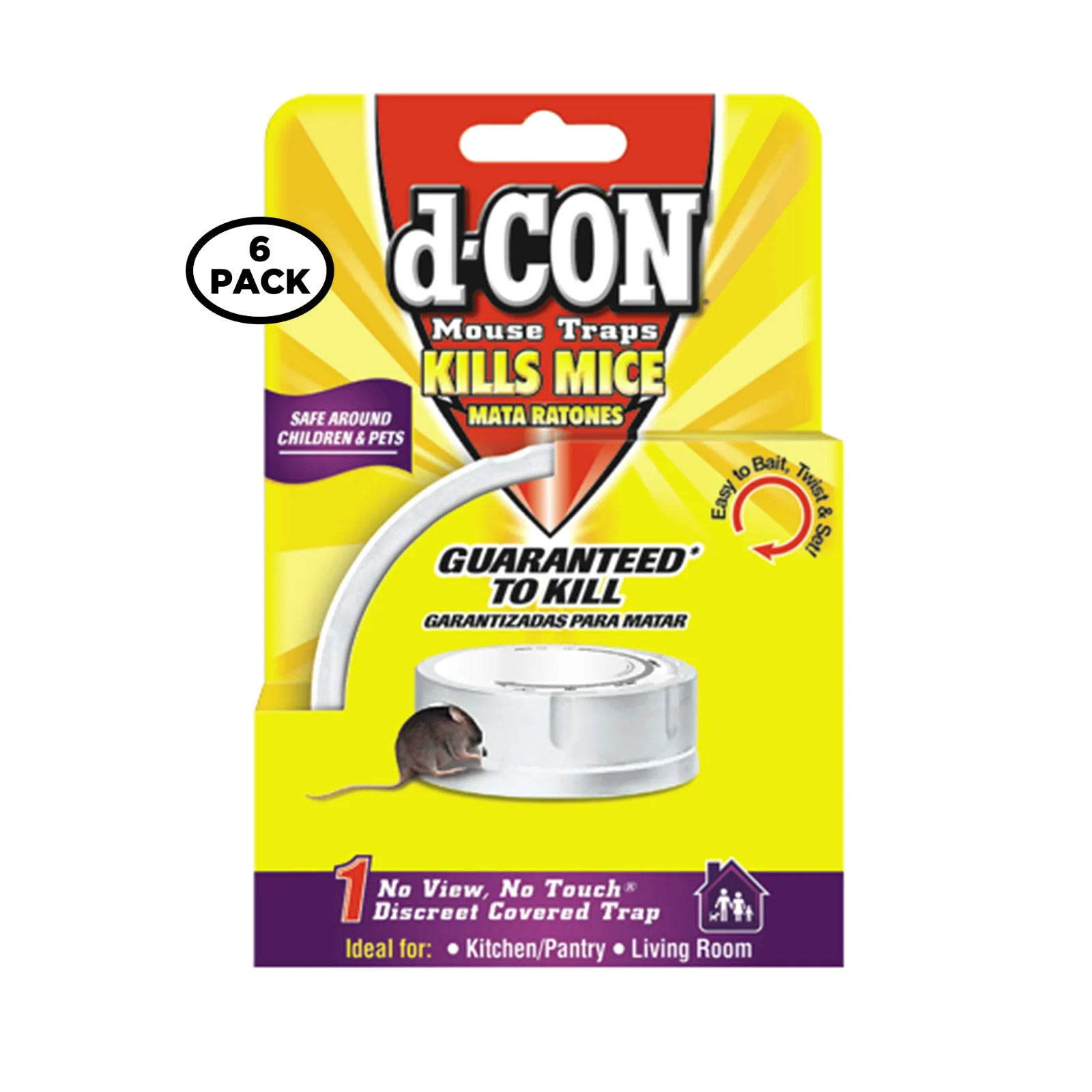
Inside the round case of the d-CON No View, No Touch trap, a mouse is caught out of sight. The whole trap then goes in the trash, so nobody in the family handles the mouse. How to bag and throw it away is covered in the guide to cleaning up after mice.
Our d-CON mouse traps and bait stations differ mostly in what you see afterwards and what goes in the trash. The guide to choosing a bait station or a mouse trap covers the tradeoffs room by room.
| Product | What it is | From | Buy |
|---|---|---|---|
| Refillable Corner Fit Mouse Bait Station | A reusable bait station with refill blocks in the box | $0.75 per refill |  |
| Disposable Corner Fit Mouse Bait Station | A sealed station already filled with bait | $2.52 per station | |
| No View, No Touch Covered Mouse Trap | A covered snap trap, thrown away with the mouse inside | $2.55 per trap | |
Every product named here is part of the d-CON catalog.