Key points
- Never sweep or vacuum droppings, urine or nests: the CDC warns this can put droplets with viruses into the air.
- Wear rubber or plastic gloves, soak the mess with bleach solution or an EPA-registered disinfectant for 5 minutes, then wipe with paper towels.
- Dead mice and used traps go into a knotted plastic bag inside a second bag, in a covered garbage can.
- Seal any gap a pencil fits through: mice pass through 1/4 inch.
Why a broom and a vacuum stay in the closet
Hantaviruses spread mainly from rodents to people, and they can cause serious illness and death. According to the CDC, the virus gets into the air when fresh urine, droppings or nesting material from an infected rodent are stirred up, and a person breathes it in. It can also enter through cuts, the eyes, the nose or the mouth.
A broom does exactly that stirring. So does a vacuum, which the CDC names along with sweeping as the two things never to do with rodent waste. Wet the mess first and lift it, and the dust stays on the floor. That is why this job starts with a spray bottle rather than a dustpan.
Rodent control is the main way to prevent hantavirus pulmonary syndrome, the CDC says, so the cleanup belongs to the same job as the traps. The same CDC page asks that wild rodents near people be controlled and kept out of homes, which is where sealing the gaps comes in once the floor is clean. If you are still working out where the mice travel, the guide to signs of mice in your house shows what to look for first.
Before you start: air the room and put on gloves
A shed, attic or cabin that has been shut up needs fresh air before anyone cleans inside. The CDC asks for it to be aired out for 30 minutes before the cleaning starts.
Rubber or plastic gloves go on next. UC IPM, the University of California pest program, adds a short rule that covers the whole job: do not touch mice with bare hands. Keep the gloves on until the last bag is tied and the area is wiped down.
Measure the bleach solution rather than guessing at it: 1.5 cups of bleach in 1 gallon of water. A disinfectant that carries an EPA registration number works too, as long as its own label sets the soak time.
- Rubber or plastic gloves.
- Bleach and a gallon of water, or an EPA-registered disinfectant.
- A spray bottle and a roll of paper towels.
- Two plastic bags for each load of waste, and a garbage can with a lid.
Droppings, urine and nests, step by step
Each step comes from the CDC page on cleaning up after rodents. The order matters more than speed, since the point is to keep the dust down from start to finish.
Look along counters, inside drawers and under the sink before you begin. EPA lists droppings around food packages, in drawers or cupboards and under the sink among the signs of mice, and chewed food packaging marks the shelves that need the spray as well.
- 1
Spray the droppings, urine or nesting material with the bleach solution or the disinfectant until it is very wet.
- 2
Let it soak for 5 minutes, or as long as the disinfectant label says.
- 3
Wipe it up with paper towels and drop them straight into a plastic bag.
- 4
Disinfect the area where the waste was.
- 5
Tie the bag, put it inside a second bag, tie that one too and place it in a covered garbage can.
| Step | What the CDC says |
|---|---|
| Air a closed building | 30 minutes before cleaning |
| Bleach solution | 1.5 cups of bleach to 1 gallon of water |
| Or instead | An EPA-registered disinfectant, used as its label directs |
| Soak time | 5 minutes, or as the label says |
| Wipe with | Paper towels |
| Waste, dead mice, used traps | A knotted plastic bag inside a second bag, in a covered garbage can |
Never sweep or vacuum rodent urine, droppings or nesting material.
A caught mouse in a No View, No Touch trap
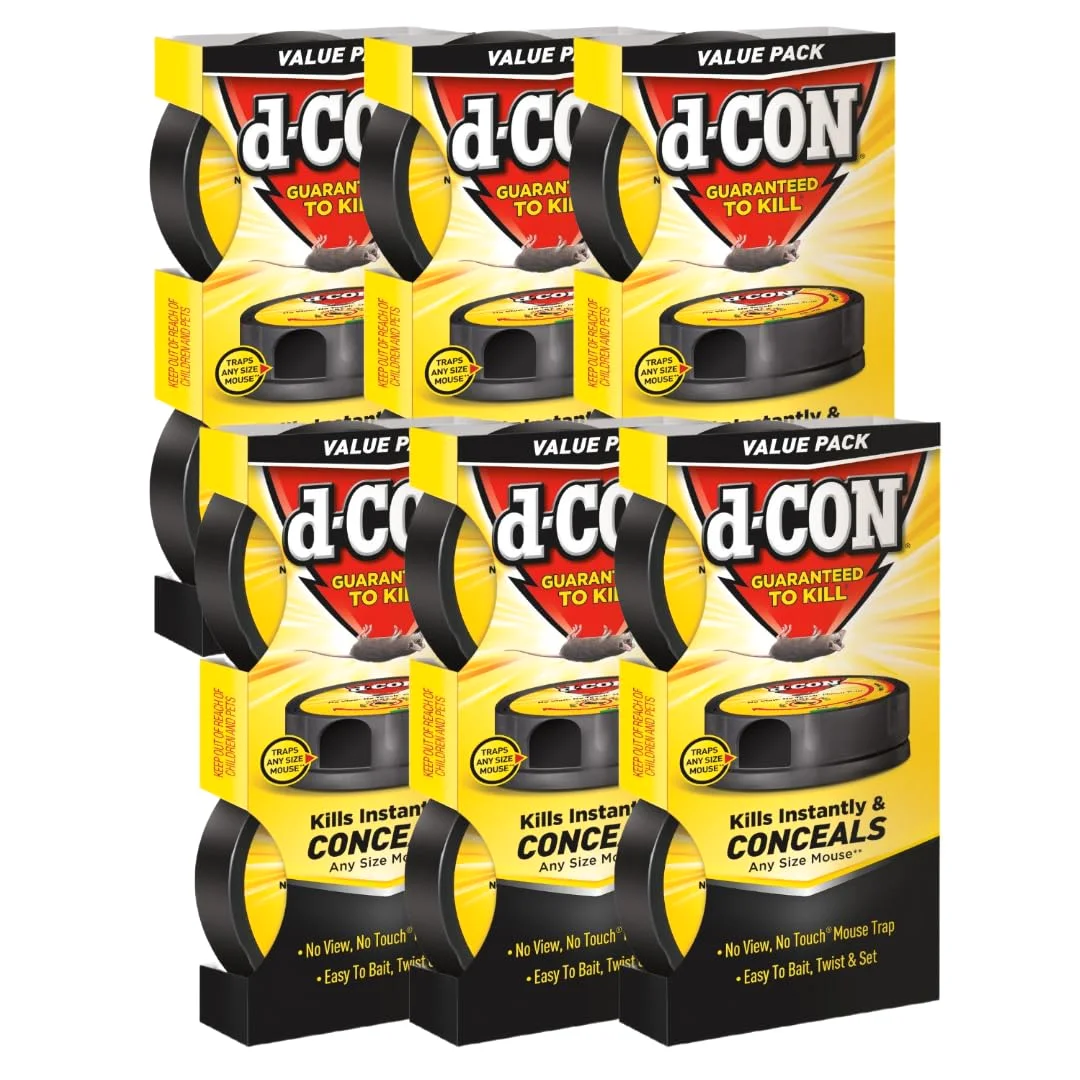
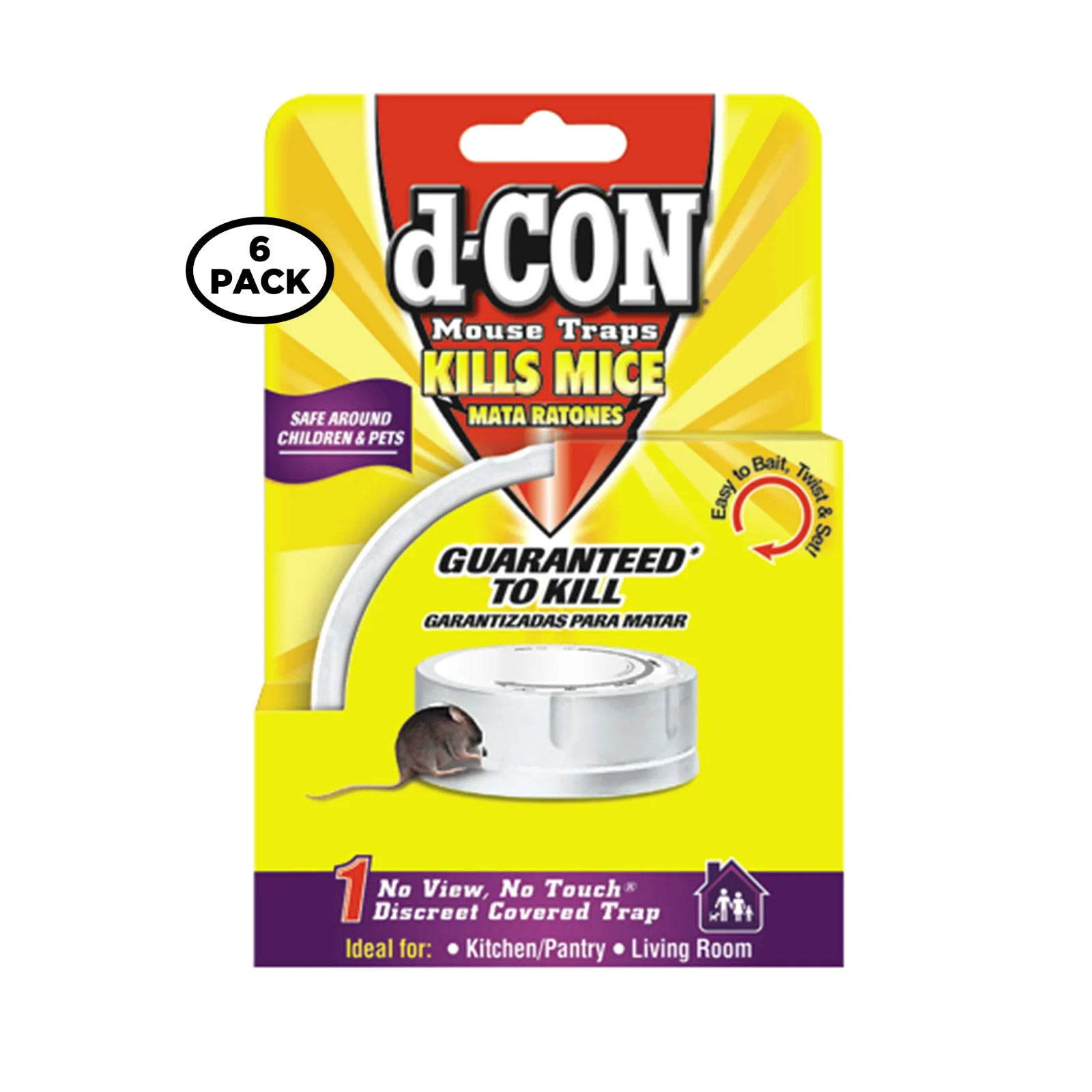
A covered trap saves most of the work. The d-CON No View, No Touch Covered Mouse Trap is a snap trap inside a round case, and a mouse that goes in is caught out of sight. When the trap shows a catch, the whole thing goes in the trash with the mouse still inside. Check each trap every day, so a catch never sits along the wall for long.
Gloves still go on for that last step. Lift the trap, drop it into a plastic bag, knot the bag and put it inside a second one, the way the CDC asks for a dead rodent and a used trap. Then into the covered garbage can it goes.
Fresh traps take the place of the old ones along the same wall. Our shelf of d-CON mouse traps holds the covered trap in a box of 6 single traps or in 6 packs of 2.
| Product | In the pack | Price | Price per piece | Buy |
|---|---|---|---|---|
| d-CON No View, No Touch Covered Mouse Trap | 6 traps | $21.99 | $3.66 per trap |  |
| d-CON No View, No Touch Covered Mouse Trap | 12 traps | $30.60 | $2.55 per trap | |
Bait stations, empty stations and dead mice nearby
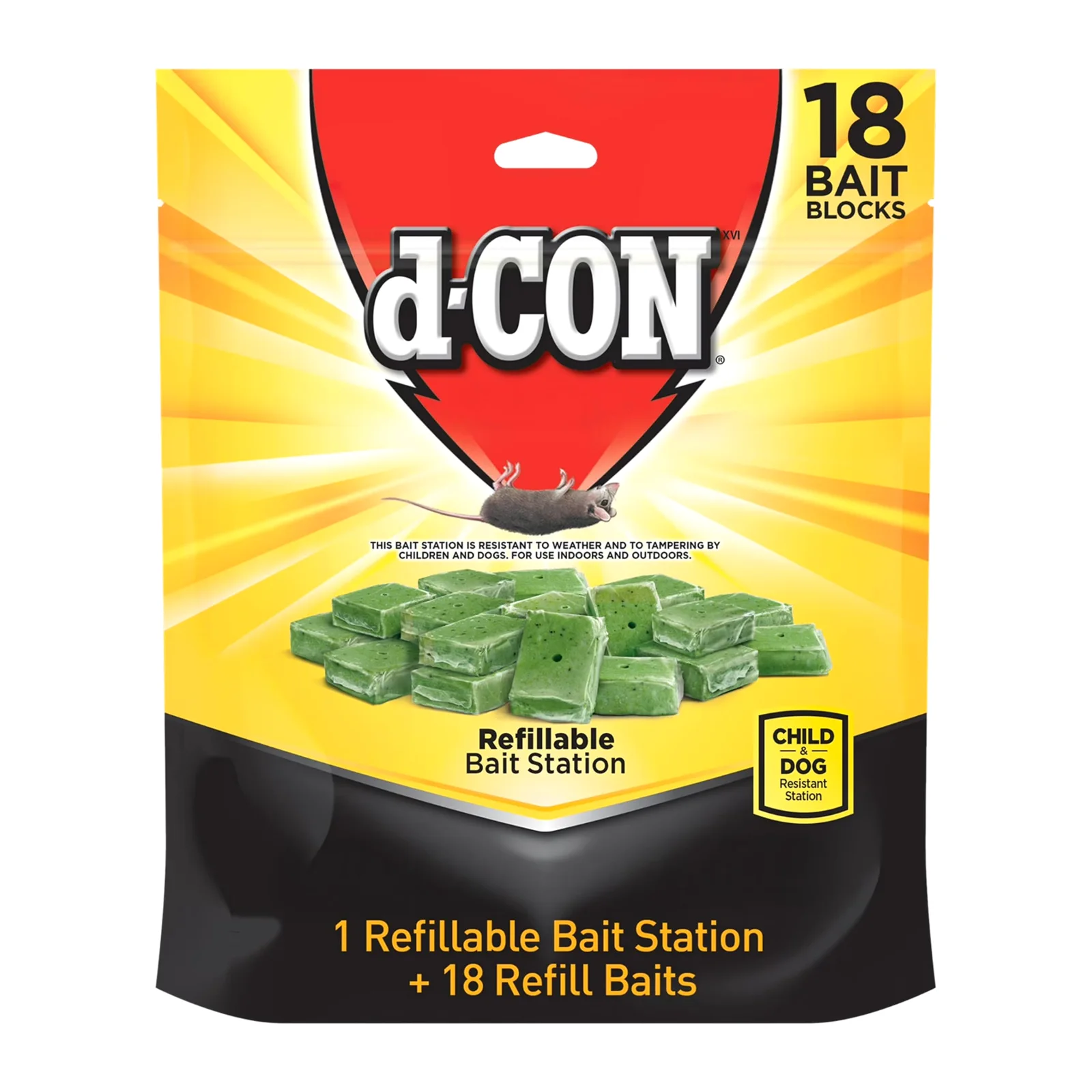
A disposable bait station is thrown away whole once its bait is gone. The d-CON disposable Corner Fit station has a clear cover, so a look tells you when that time has come, and the label on the bag says how to throw it out.
Refill blocks for the refillable station stay in their closed package between uses. Open the box only to load the cartridge, then close it and put it away from food, children and pets.
Any dead mouse you find near a station is handled like the waste above. Spray it, let it soak, bag it twice with gloves on and wipe down the spot. Then look at the station itself. A station that sits in the middle of droppings may need to move, and the guide on where to put a mouse bait station covers the spots that work.
Seal the gaps so the cleanup lasts
Mice fit through a hole the width of a pencil, 1/4 inch or 6 millimeters. UC IPM calls keeping them out the most successful and permanent control, and EPA advises sealing holes both inside and outside the home.
House mice seldom go more than 30 feet from their nest and food, according to UC IPM. The gaps closest to the droppings you just cleaned are the first ones to close.
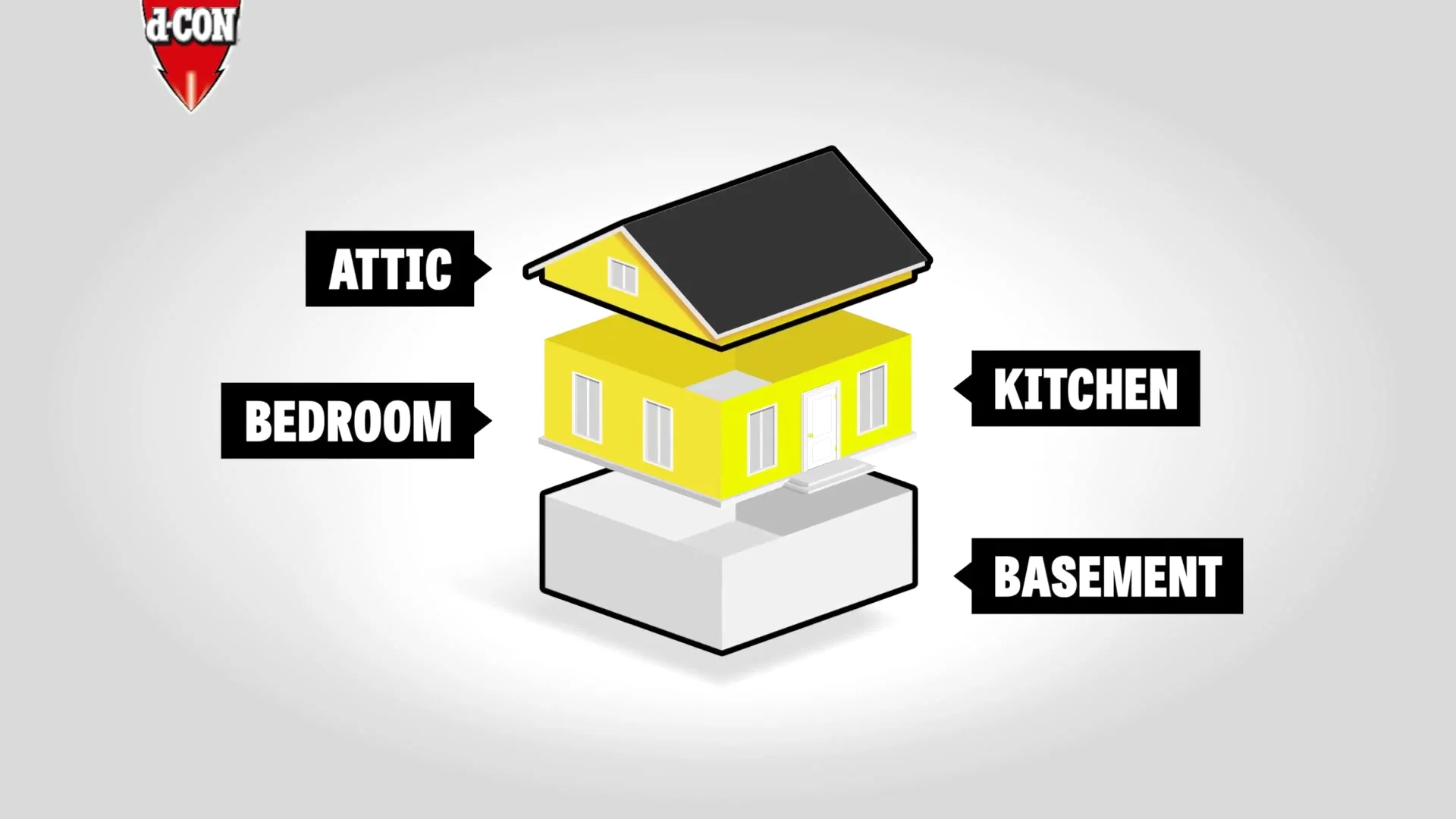
Start where pipes, vents and wires come through. The CDC lists the places to check:
- Inside cabinets and behind appliances.
- Around pipes, vents and utility lines.
- In the attic, the basement and the crawl space.
- Outside around the roof, doors, windows and foundation.
What to fill the holes with, and what to change outside
For small holes the CDC uses steel wool held in place with caulk or spray foam. Larger gaps need lath screen, metal, cement or hardware cloth. UC IPM calls steel wool a good temporary plug and metal or concrete a lasting one. Plastic screening, rubber, foam and wood on their own do not stop mice, the same program warns.
Food is the other half of the job. Keep food and garbage in thick plastic, metal or glass containers with tight lids, and put the pet food away at night. Outdoors, EPA suggests clearing leaf piles and deep mulch and pausing bird feeding while mice are active.
Compost, woodpiles and old vehicles belong at least 100 feet from the house, CDC advises. Once the gaps are closed, set a few traps or d-CON bait stations along the walls and watch for new signs.
Every product named here is part of the d-CON selection.