Key points
- CDC names droppings pointed at one end and gnaw marks as the two signs of rodents.
- A mouse fits through a gap of 1/4 inch, about the width of a pencil.
- Never sweep or vacuum droppings: stirred-up dust is how hantavirus reaches people.
- Set traps where the signs cluster first, then seal the holes for good.
The signs mice leave behind
CDC puts two signs of rodents ahead of all others: droppings and gnaw marks. Mouse droppings are small, pointed at one end and often hold bits of hair. Gnaw marks show up as fresh, pale scrapes on wood, plastic or the corner of a box. Either one tells you mice have been in the room. Fresh ones in the same place, day after day, tell you they are still there.
EPA adds a few more to the list. Shredded material gathered into a soft pile is a nest in the making. Food packages may have chewed corners or small holes in the side. Holes can also appear through walls and floors. Last comes the nose: a stale smell drifting out of a hidden space, such as the gap behind a cabinet or the dark corner under the stairs.
Why act early? Rodents spread disease to people through droppings, urine, saliva, bites and food they have touched. CDC names an infestation in and around the home as the main way that happens. A handful of droppings is easier to deal with than a nest that has had a season to grow.
| Sign | What it looks like | Where to look first |
|---|---|---|
| Droppings | Small, pointed at one end, often with hair in them | Around food packages, in drawers and cupboards, under the sink |
| Gnaw marks | Chewed edges and small holes | Food packaging, walls and floors |
| Nesting material | Shredded, soft material gathered in one spot | Hidden corners and quiet storage spaces |
| Smell | A stale odor | Hidden areas you cannot see into |
From CDC and EPA pages on rodent signs.
Where to look in your home
Start in the kitchen, because that is where the food is. Open the cupboards and drawers, pull out the pan drawer under the oven if it slides, and shine a flashlight under the sink. EPA lists these places first for droppings. After that, go through the pantry shelves, the back of the bread box and any spot where pet food is stored.
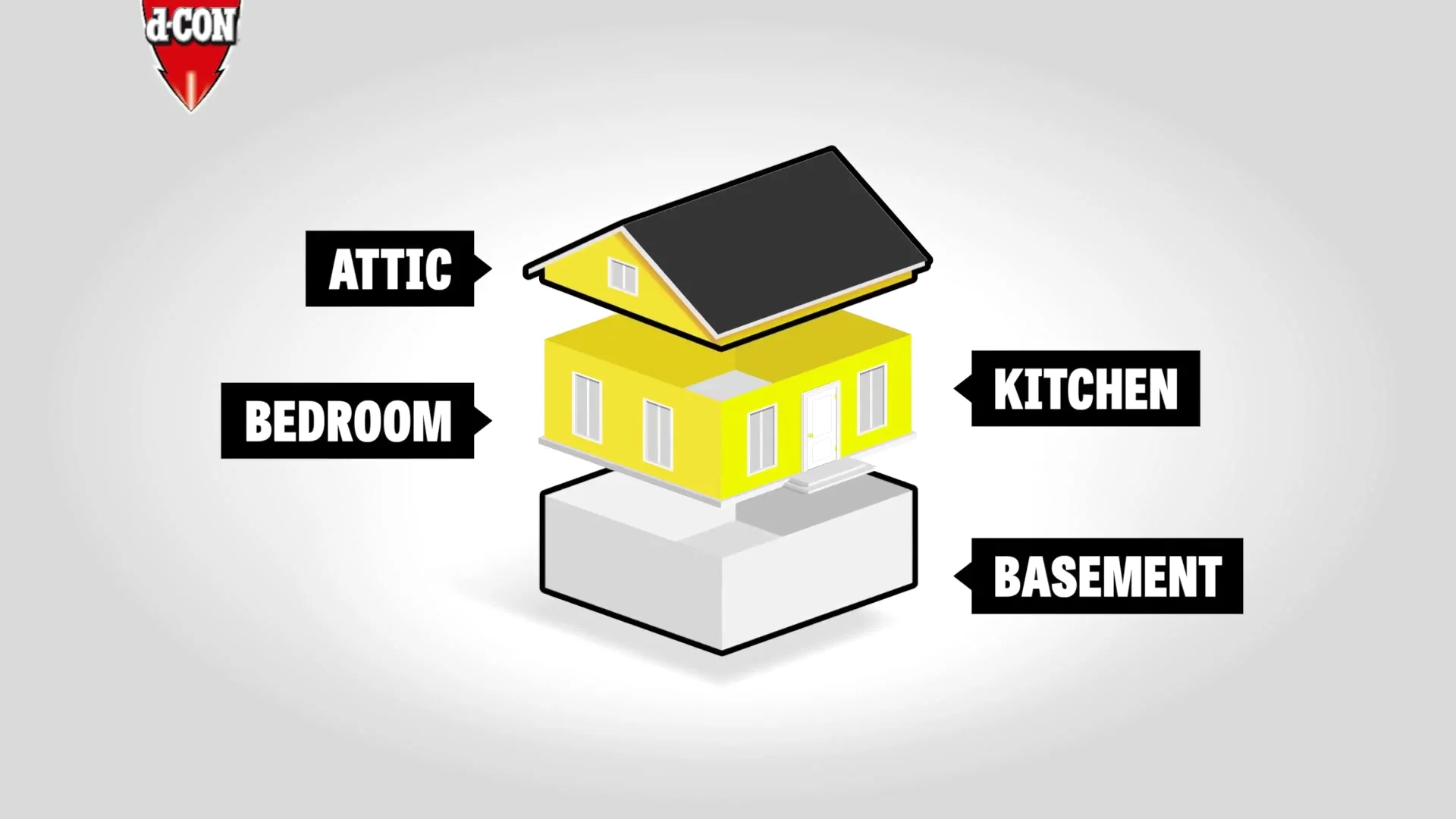
Next come the quiet parts of the house. CDC sends you inside cabinets, behind the fridge and stove, around pipes and vents, and up into the attic or down into the basement and crawl space. A house mouse seldom travels more than 30 feet from its nest and food, according to UC IPM. So a cluster of droppings in one room usually means the nest is close by, not on the far side of the house.
How mice get in
A mouse can squeeze through a hole the width of a pencil. CDC puts that at 1/4 inch, or 6 millimeters, and UC IPM gives the same figure. Gaps of that size hide around the pipes under a sink, where a utility line enters the wall, beside a dryer vent and under a door that no longer meets its threshold.
Walk around the outside of the house as well. Look along the foundation, around windows and doors, and where the roof meets the walls. Woodpiles and compost bins give mice cover right next to the house, and CDC suggests keeping them, along with any abandoned vehicle, at least 100 feet away. Leaf piles and deep mulch against the wall do the same job for a mouse, EPA notes, and pausing a bird feeder during an infestation removes one more food source.
What not to do when you find droppings
Hold off on the broom and the vacuum. Hantavirus spreads from rodents to people mostly through the air. When fresh urine, droppings or nesting material from an infected mouse are stirred up, the virus rises with the dust and gets breathed in. CDC adds that it can also enter through cuts, the eyes, the nose or the mouth. For the same reason UC IPM tells you never to touch a mouse with bare hands. CDC calls rodent control the primary way to prevent hantavirus illness, which is one more reason to start trapping soon after the first droppings turn up.
Cleaning comes after the mice are under control, and it has its own order of steps: gloves, a disinfectant spray, a soak, then paper towels. Those steps, in the order CDC gives them, are in our guide on how to clean up after mice. Until then, leave the droppings where they are and keep children and pets out of the area.
First steps once you know mice are inside
Put food out of reach the same day. CDC advises thick plastic, metal or glass containers with tight lids for food and garbage, and putting pet food away overnight. Crumbs on the counter and an open bag of dog food keep a mouse coming back to the same spot, night after night. Outside, EPA suggests garbage cans with tight lids and clearing leaf piles away from the walls.
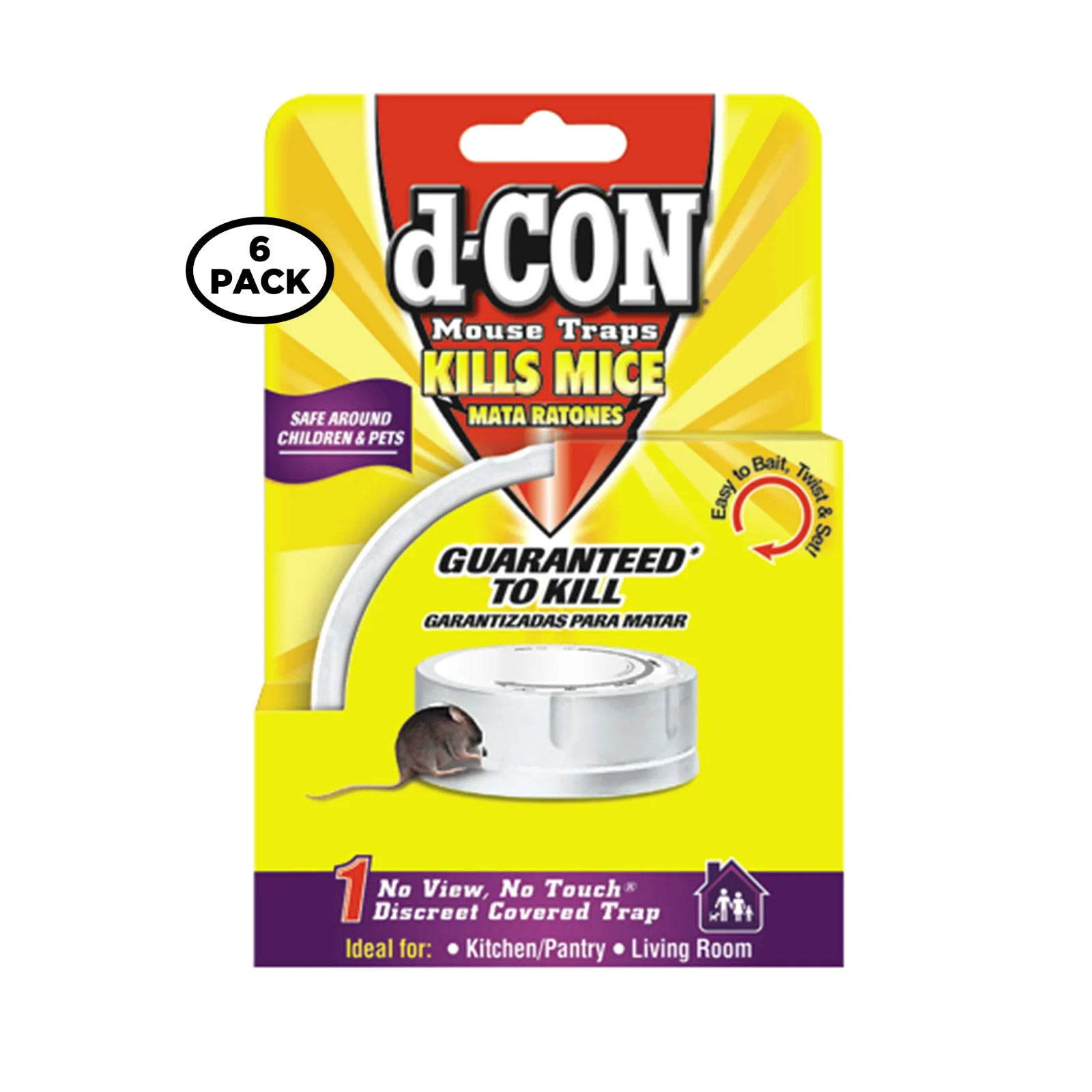
Then set traps right where the signs are. UC IPM calls trapping the preferred method when only a few mice are present, and it puts traps close to walls, behind objects and where droppings turn up. A covered snap trap such as the d-CON No View, No Touch trap takes a dab of peanut butter, sets with a twist and goes in the trash with the mouse inside.
Spacing matters as much as the spot. UC IPM sets mouse traps no more than about 10 feet apart, since a mouse does not range far. Two or three traps along one kitchen wall do more than a single trap in the middle of the floor.
| Product | In the pack | Price | Price per piece | Buy |
|---|---|---|---|---|
| d-CON No View, No Touch Covered Mouse Trap | 6 traps | $21.99 | $3.66 per trap |  |
| d-CON No View, No Touch Covered Mouse Trap | 12 traps | $30.60 | $2.55 per trap | |
When traps are not enough, and sealing up for good
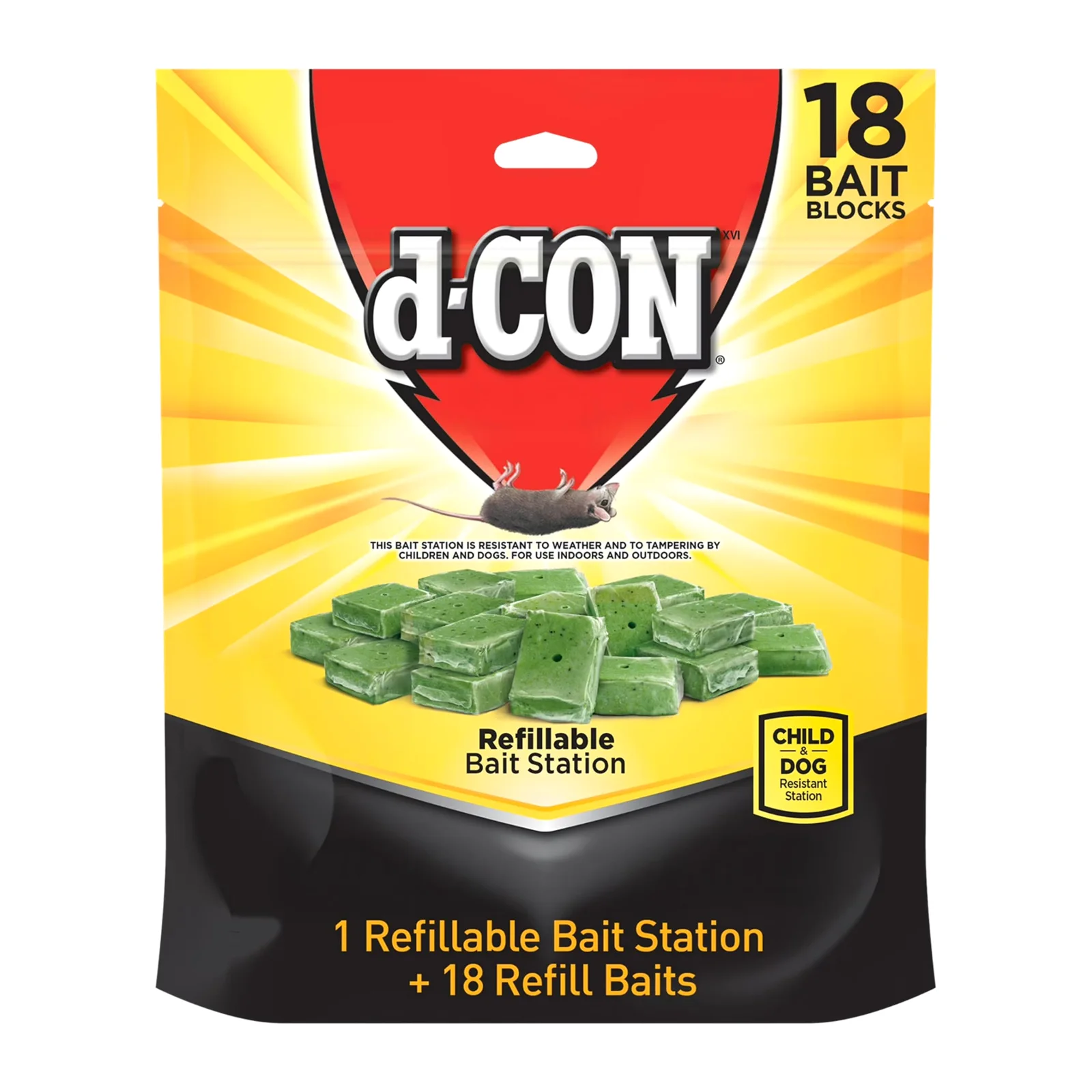
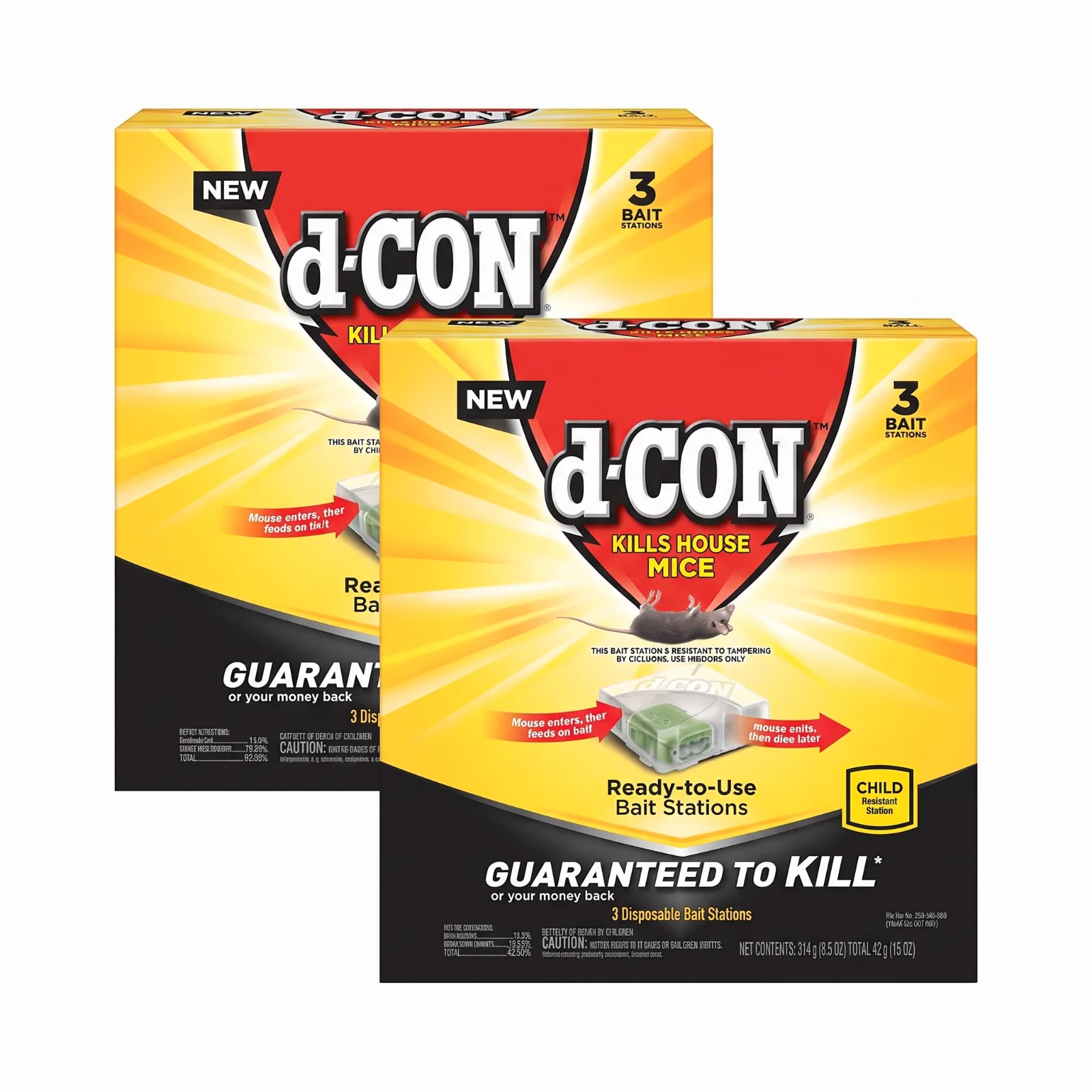
Droppings that keep appearing after you have trapped and cleaned mean mice are still active, CDC says. That is the point where a bait station earns a place. The mouse bait stations shelf holds the d-CON refillable and disposable Corner Fit models, and the label of each one decides where it may go. For the spots and the spacing, see our guide on where to put a mouse bait station.
Sealing is the step that keeps the problem from coming back. UC IPM calls exclusion the most successful and permanent control. Steel wool pushed into a small hole makes a good temporary plug, and CDC suggests holding it in place with caulk or spray foam. Larger gaps call for lath screen, metal, cement or hardware cloth.
A station is a different tool from a trap. UC IPM notes that rodenticides sold for home use come only in ready-to-use bait stations, never as loose bait. Set one where the droppings were, against the wall, and well out of reach of children and pets. Read the label on the package before you open it, because the label sets the rules for that product.
- Plastic screening, rubber, foam and wood on their own do not stop a mouse, UC IPM warns.
- Check inside cabinets, behind appliances and around pipes, vents and utility lines.
- Outside, look at the roof line, the doors, the windows and the foundation.
- Skip plug-in sound gadgets: UC IPM states that high-frequency electronic devices are not effective.
Every product named here is part of the d-CON range.