Key points
- Consumer bait comes only in ready-to-use stations, as blocks or paste. Pelleted bait is no longer permitted in consumer products.
- Four second-generation anticoagulants are sold only to professionals, not to households.
- In November 2022 EPA proposed prohibiting refillable stations for consumer-sized products. It is a proposal, not a rule.
- The label is the law: using a product in a way its label does not allow breaks federal law.
What a household can buy: bait inside a station
EPA allows rodenticide products on the consumer market only as ready-to-use bait stations that contain or come with bait in block or paste form. Pelleted baits are no longer permitted in products for consumers, and loose bait forms are gone from the shelf with them.
The amount is capped as well. No consumer product may hold more than one pound of poison, and a refillable station may be packaged with up to one pound of refill bait. A station that is not refillable is thrown away once its bait is eaten or contaminated.
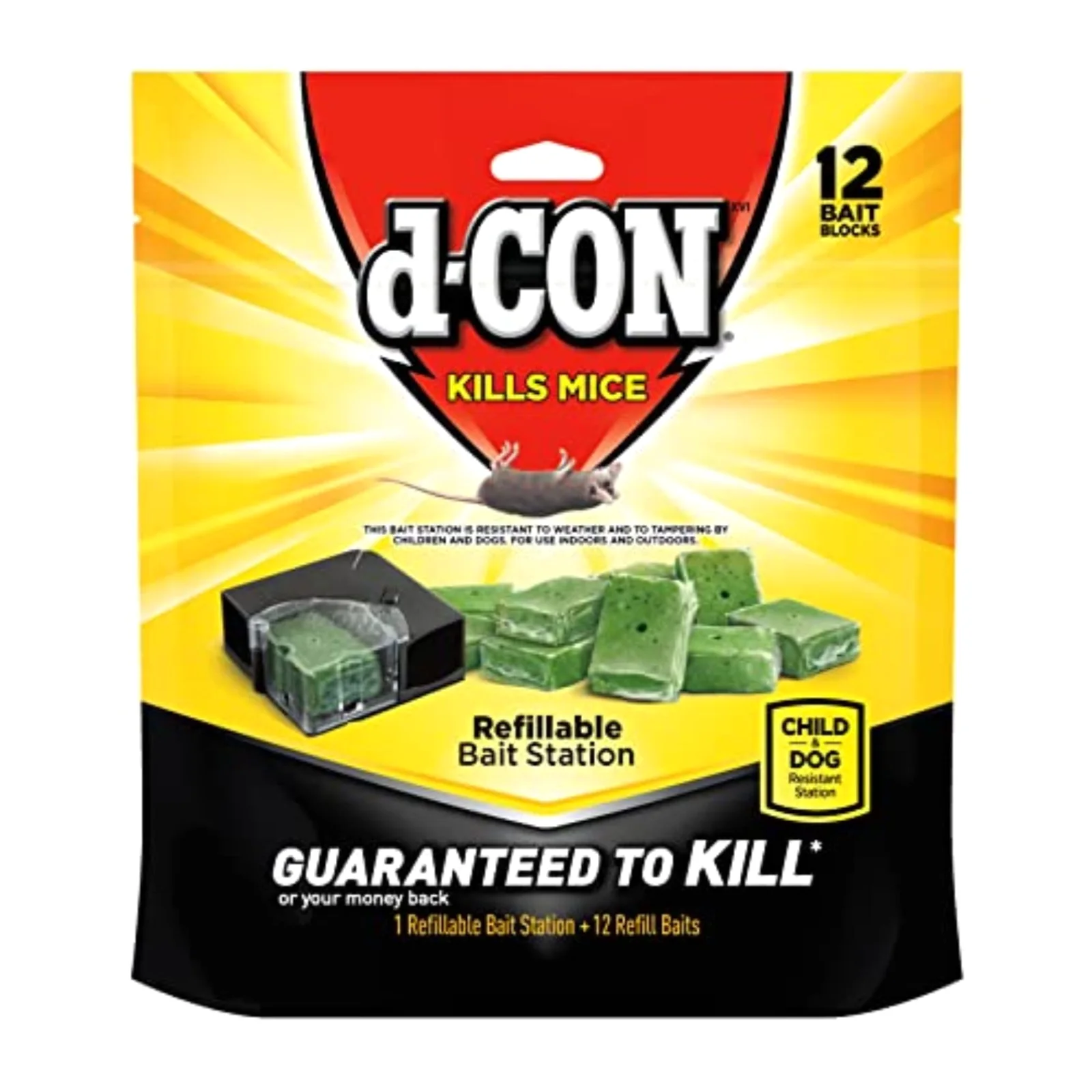
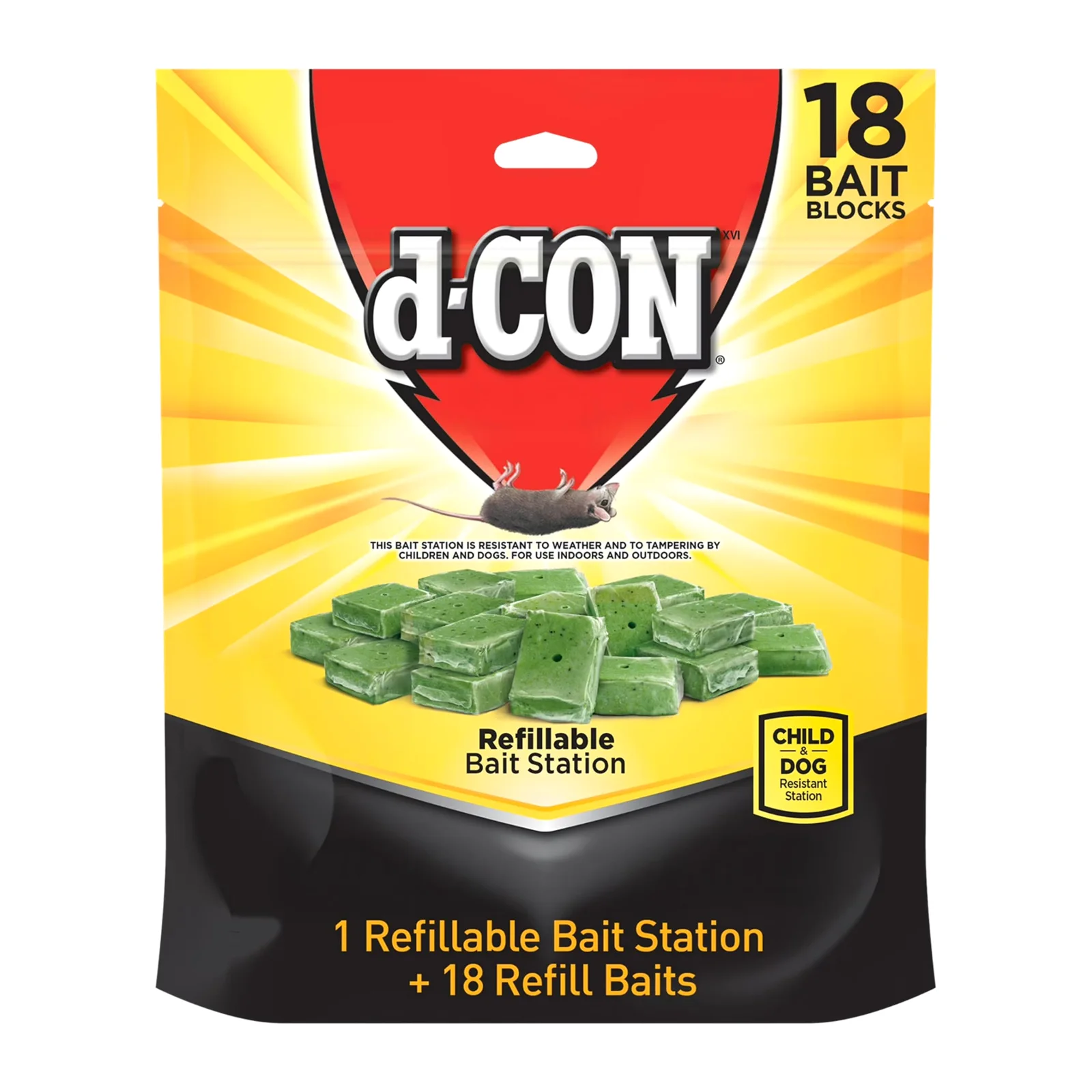
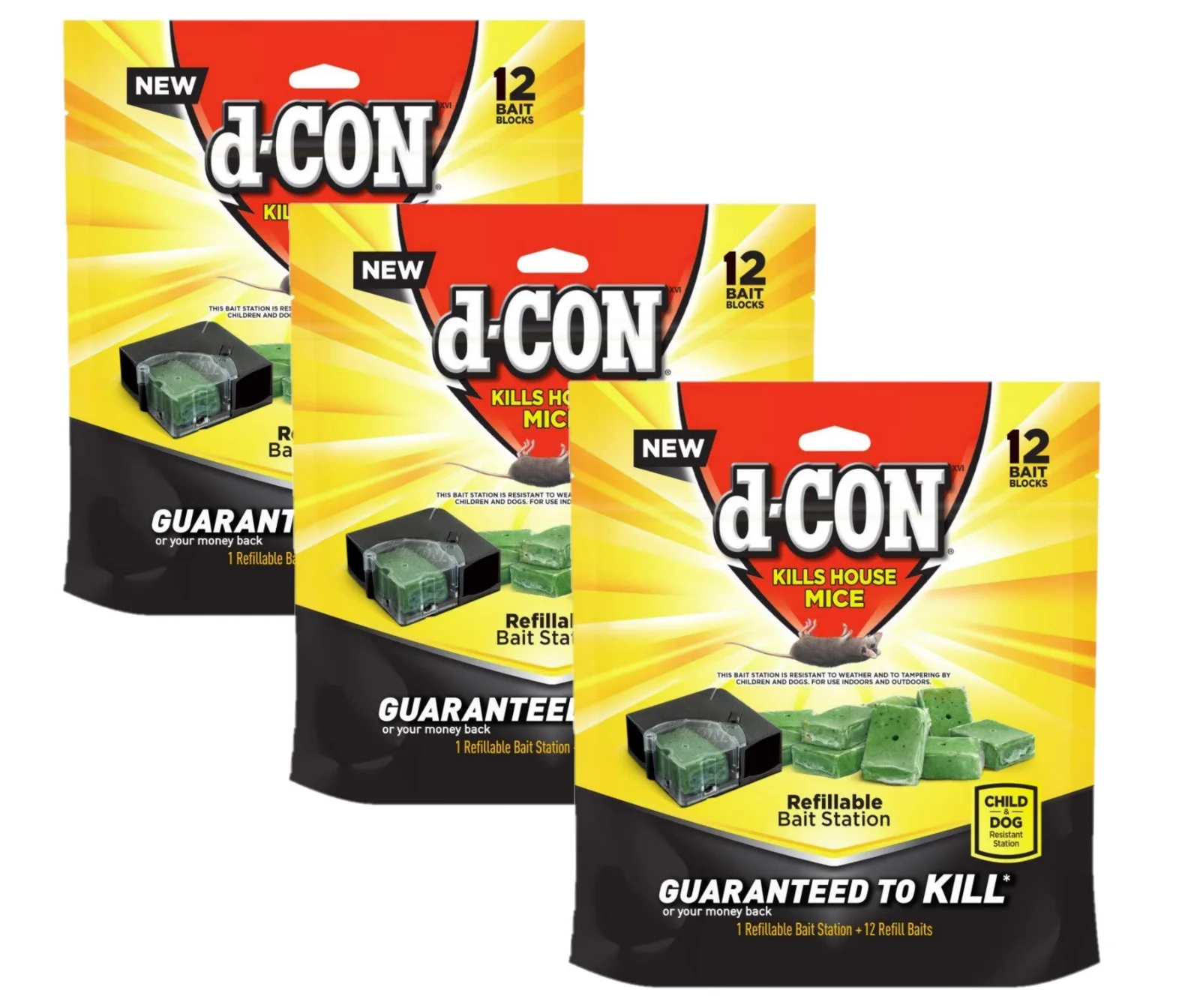
Both shapes sit on our shelf of d-CON bait stations. The refillable Corner Fit station comes with refill blocks that click into its cartridge, and the disposable Corner Fit station arrives filled and is never opened.
Either way the bait stays inside the station. The spare blocks in the bag are for the cartridge, not for the floor, and a loose block set out on its own is exactly what the consumer rules are meant to prevent.
Why the strongest baits went to professionals
Four second-generation anticoagulants are no longer registered for consumer products: brodifacoum, bromadiolone, difenacoum and difethialone. EPA lets commercial and structural pest control companies keep using them, including inside homes.
Bromadiolone shows how that split works. It was first registered in the United States in 1980. The National Pesticide Information Center says its products are now intended only for sale to professionals, to cut down on accidental poisoning of children and wildlife.
Wildlife and pets are part of the reason. EPA notes that they can be poisoned by eating rodents that consumed bait. UC IPM adds that a dead rat can hold several lethal doses, so a pet or a wild animal that eats one is at risk too.
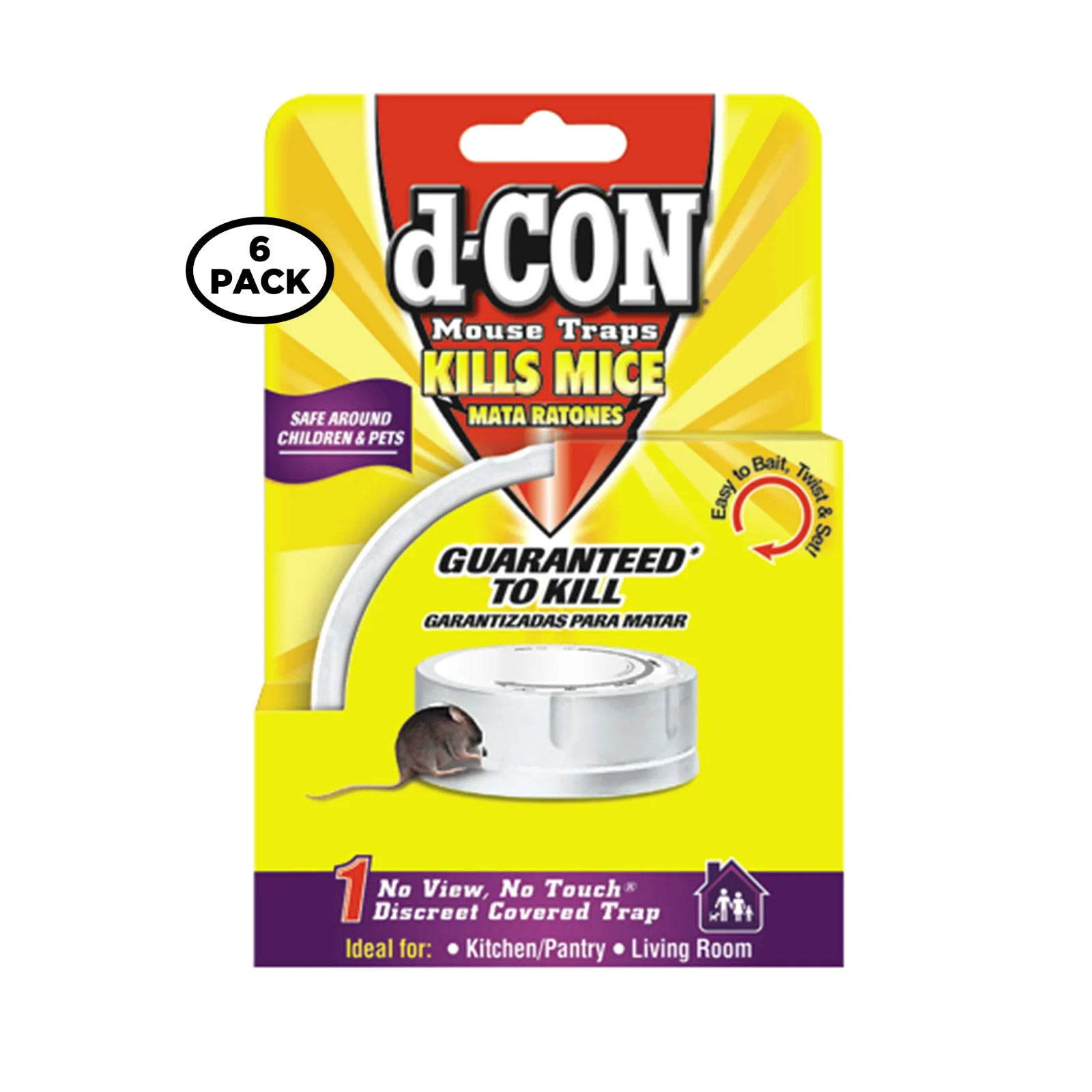
Which active ingredient a given consumer station holds is printed on its label, and the label is the place to read it. Households that would rather keep poison out of the picture have another route. Our d-CON mouse traps are mechanical and hold no bait poison, only the food you add.
When the rules took effect
EPA set these limits in its 2008 risk mitigation decision. The agency gives that year but no single date for when the new products reached store shelves.
Two university programs fill in that date. UC IPM writes that federal rules in effect since mid-2011 let manufacturers sell the general public only wax block, gel or paste baits packaged in or with ready-to-use stations. The University of Nebraska-Lincoln Extension puts the start of the stricter consumer rules at June 4, 2011. UC IPM adds that EPA restricted retail sale of second-generation anticoagulants at that time.
The Nebraska guide also describes the four tiers of bait stations that came with those rules, sorted by how well a station resists children, dogs and weather. Depending on its tier, a station is labeled for indoor use, or for indoor use and outdoor use within 50 feet of buildings.
The same publication sums up PR Notice 94-7, the older EPA notice behind the word tamper-resistant on a label. Among other things, such a station must resist dogs and children under 6 and be anchored when used.
| When | What changed | Who says so |
|---|---|---|
| 2008 | EPA risk mitigation decision sets the rules for consumer bait | EPA |
| Mid-2011 | Federal rules in effect: blocks, gels or pastes in or with ready-to-use stations | UC IPM |
| June 4, 2011 | Stricter consumer rules start, with four tiers of bait stations | University of Nebraska-Lincoln Extension |
| December 31, 2014 | Production of 12 older d-CON products stops | EPA |
| January 1, 2015 | All registered consumer rat and mouse poisons conform to the 2008 decision | EPA |
| March 31, 2015 | Distribution of those 12 products to stores ends | EPA |
| November 2022 | EPA proposes further measures, including no refillable stations in consumer-sized products | EPA |
What happened to older d-CON products
EPA reached an agreement with Reckitt Benckiser to cancel 12 d-CON rat and mouse poison products that did not meet its safety standards. All 12 were sold without a protective bait station, and 8 of them contained second-generation anticoagulants.
Production of those products stopped on December 31, 2014. Distribution to stores ended on March 31, 2015. From January 1, 2015, EPA says, all registered consumer rat and mouse poisons conform to its 2008 decision.
Old product sometimes turns up on a garage shelf years later. EPA asks that leftovers go through a local waste program and never outdoors, into a sink or down a toilet. The d-CON Corner Fit stations in our catalog are bait stations of the kind the current rules describe.
What EPA has proposed for refillable stations
In November 2022 EPA proposed further measures for rodent control products. One of them would prohibit refillable bait stations for consumer-sized products. It is the next step in the same EPA process that produced the 2008 decision. Its aim has not changed: to limit how much children and pets come in contact with poison.
EPA has proposed the change, and a proposal is not a rule. Refillable consumer stations remain on sale while the proposal stands, and the label on each package still sets how it may be used.
If you own a refillable station, the proposal does not change how you use it today. Load one block at a time into its cartridge, keep the rest of the blocks in their closed bag away from children and pets, and follow the label. Side by side, the two station types differ mainly in what happens when the bait runs out. A disposable station goes in the trash whole when its bait is gone, so nothing in the house waits to be refilled.
| Product | What it is | From | Buy |
|---|---|---|---|
| Refillable Corner Fit Mouse Bait Station | A reusable bait station with refill blocks in the box | $0.75 per refill |  |
| Disposable Corner Fit Mouse Bait Station | A sealed station already filled with bait | $2.52 per station | |
The label is the law
Every pesticide label carries a statement that using the product in a manner inconsistent with its labeling violates federal law. EPA sums that up in four words: the label is the law. Under FIFRA, labeling also covers printed matter that comes with the product or that the label refers to.
The label turns what EPA found into conditions printed on the package. It says who may use the product, and where, how, how much and how often. A station sold for indoor use stays indoors.
The refillable d-CON Corner Fit station is a case in point. Its package description calls it weather-resistant for indoor or outdoor use, and the label sets the terms. Under EPA rules, outdoor use of a consumer station reaches only as far as 50 feet from buildings, and only for a station labeled for it.
Spacing and checking come from the same kind of guidance. The Nebraska extension advises placing house mouse stations no more than 12 feet apart, along walls and travel routes, and checking them daily at first. It also says to dispose of a single-use station and its contents as the label directs.
Read the package before you set a station down. The guide on where to put a mouse bait station works through rooms, and using mouse bait in a home with kids and pets covers storage and who to call.
Every product named here is part of d-CON products.